Download
Venue
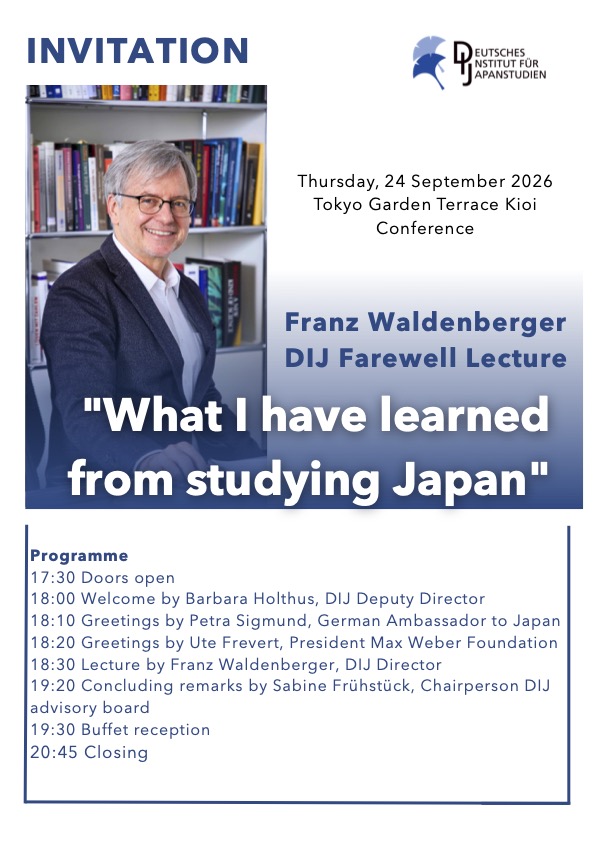
Tokyo Garden Terrace, Kioi Conference
Registration Info
This is a past event. Registration is no longer available.
 Follow us on Bluesky.
DIJ Mailing Lists
Please subscribe below to stay informed about our research activities, events & publications:
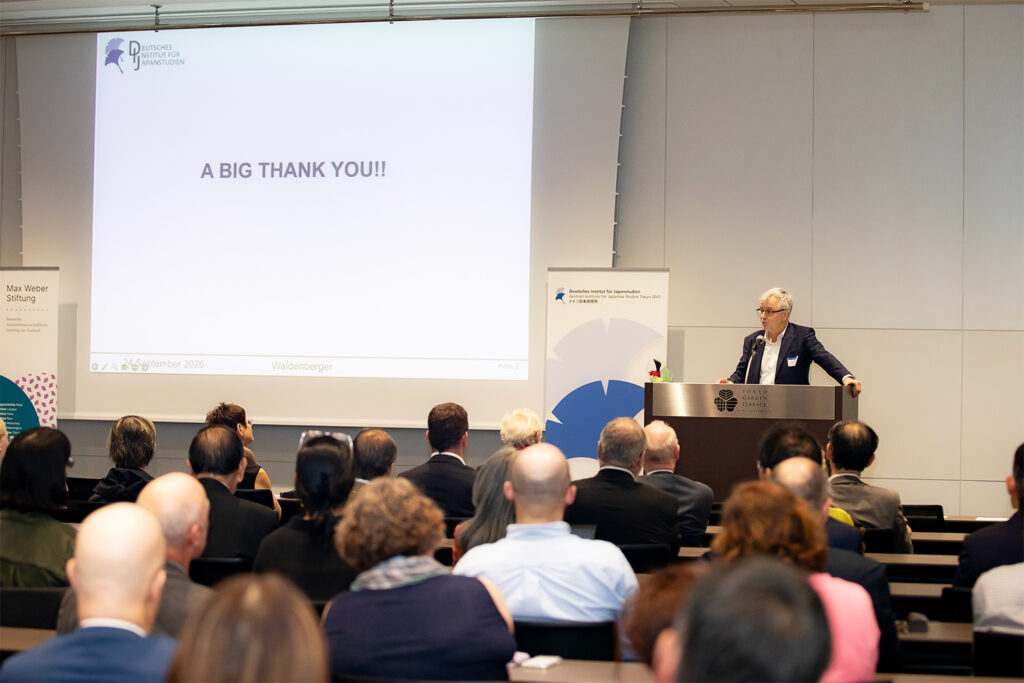
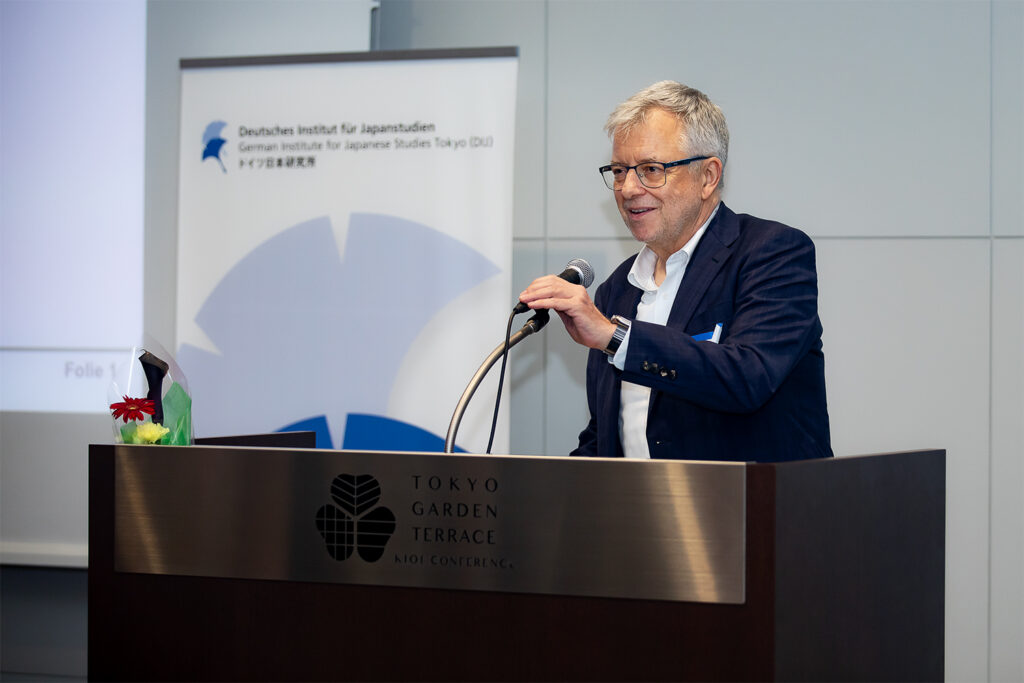
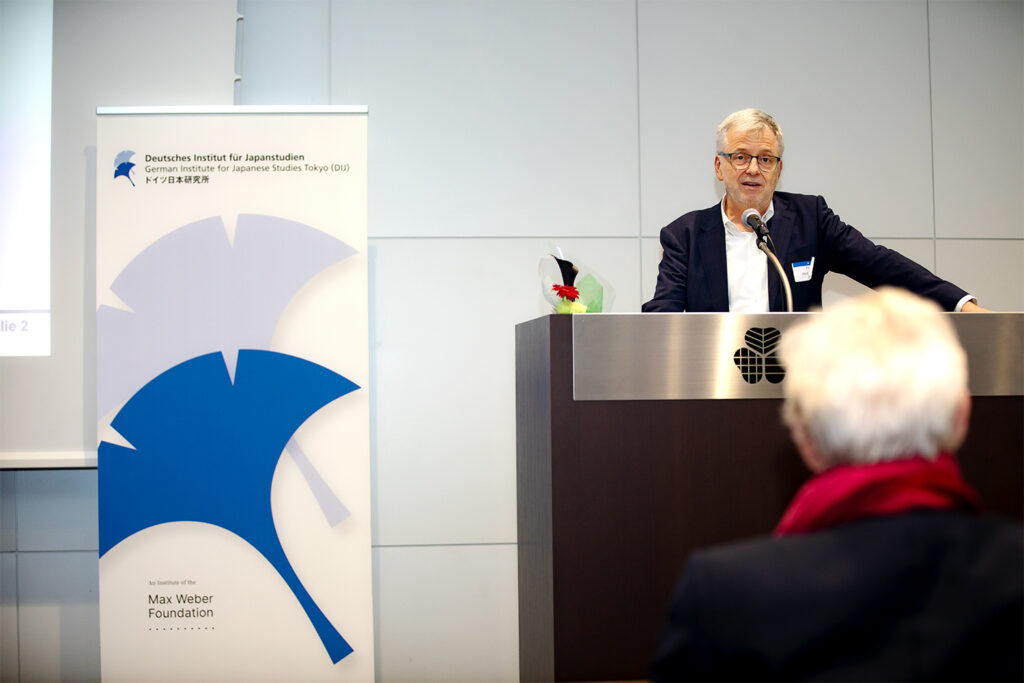
DIJ Farewell Lecture "What I have learned from studying Japan"
September 24, 2026 / 18:00 - 20:45 (JST)
Franz Waldenberger, DIJ Tokyo
After 12 years, Franz Waldenberger’s term as director of the DIJ has come to an end. With a doctorate in economics received from the University of Cologne in 1990, he first joined the institute in 1992 redirecting his academic career towards the study of the Japanese economy. In 1996, the University of Cologne granted him the Habilitation in economics for his work on Japan’s postwar economic development. Leaving the DIJ in 1997, he took on a professorship for Japanese Economy at Munich’s Ludwig-Maximilians University. After research stays as visiting professor at the University of Tokyo, Hitotsubashi University, Osaka City University, and Tsukuba University, he re-joined the DIJ in 2014 as the institute’s fourth director and the first in the field of economics.
During his term in office, he established multi-disciplinary research clusters on (1) Sustainability where projects on the future of Japan’s local communities, the green transformation and social inclusion have been conducted, (2) Digital Transformation covering the digitalization of finance, startup ecosystems, the regulation of data and imaginaries of digital futures, and (3) Japan in Transregional Perspective with foci on East and Southeast Asia, including a collaboration between the DIJ and the National University of Singapore, which developed into a successful research partnership on Asian Infrastructures with the Asia Research Institute at NUS.
His own projects, many in collaboration with renowned Japanese and international scholars, resulted in well-cited peer-reviewed journal articles as well as widely read edited volumes. The open-access publications Alterung und Pflege als kommunale Aufgabe. Deutsche und japanische Ansätze und Erfahrungen, co-edited with Gerd Nägele, Hiroko Kudo, and Tomoo Matsuda (2022) and The Future of Financial Systems in the Digital Age: Perspectives from Europe and Japan, co-edited with Markus Heckel (2022), have to date achieved 170,000 and 104,000 downloads, respectively. The recently published monograph Unleashing Innovation the East Asian Way. Startup Ecosystems in Japan, South Korea and China, co-authored with Ying Cheng, Adam Cross, Martin Hemmert, Agata Kapturkiewicz, and Masahiro Kotosaka (2026) is presently at 21,000 downloads.
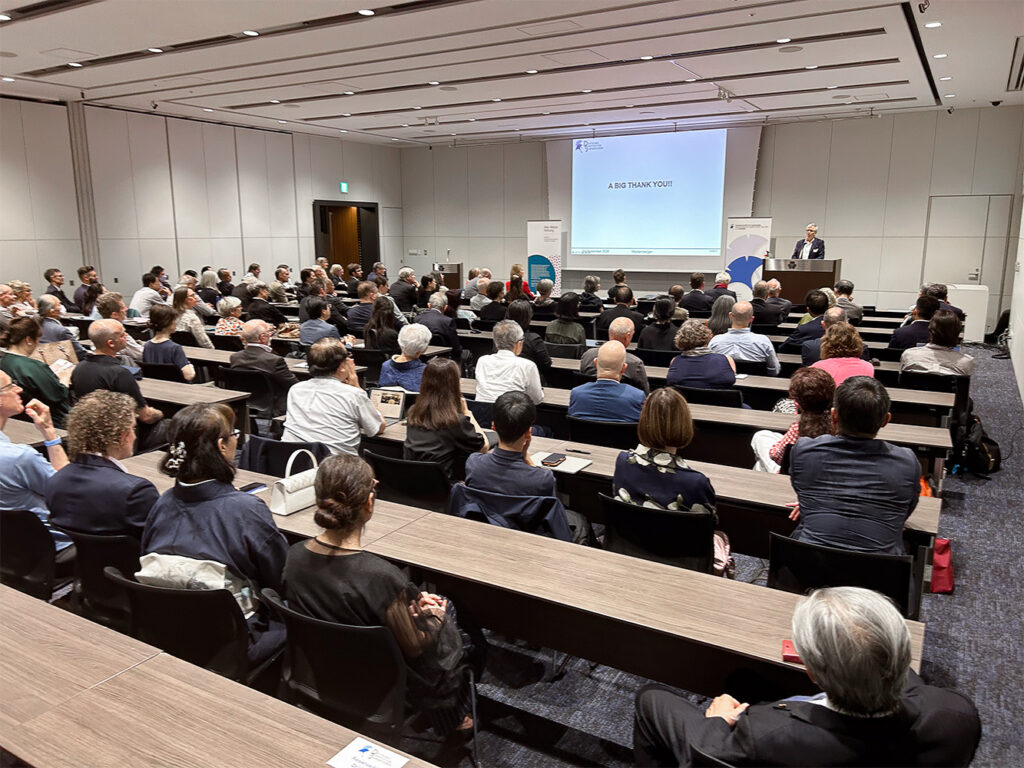
In his farewell lecture, Franz Waldenberger gave an account of his more than 30 years of research on Japan’s economy. He covered three main themes: (1) institutional variety in capitalist economies, (2) the role of knowledge, and (3) the importance of demographics. Reflecting on the “positive culture shock” he experienced when he first began studying Japan 45 years ago, Waldenberger explained that Japan, unlike Germany, was a high context culture with a focus on process orientation. He also emphasised the importance of doing research on Japan in Japan with Japanese colleagues.
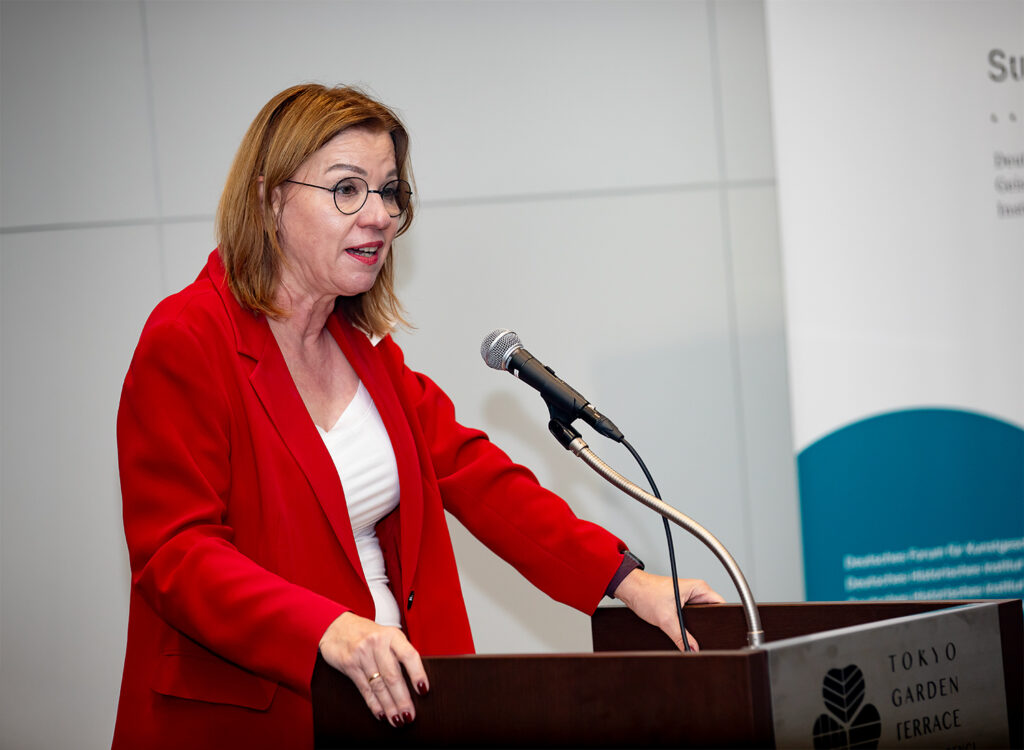
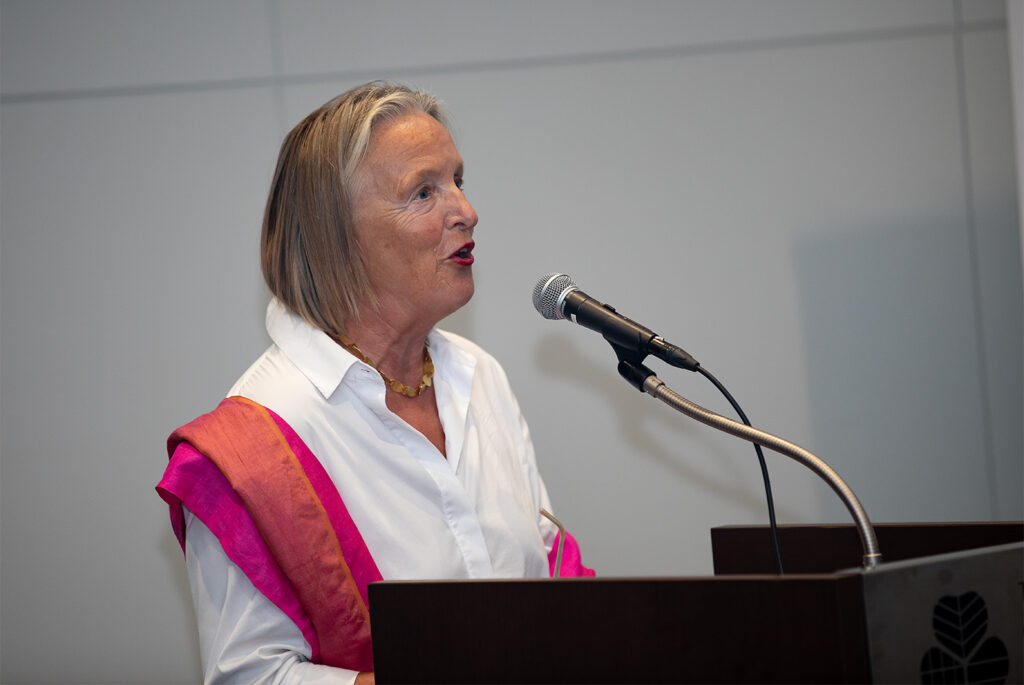
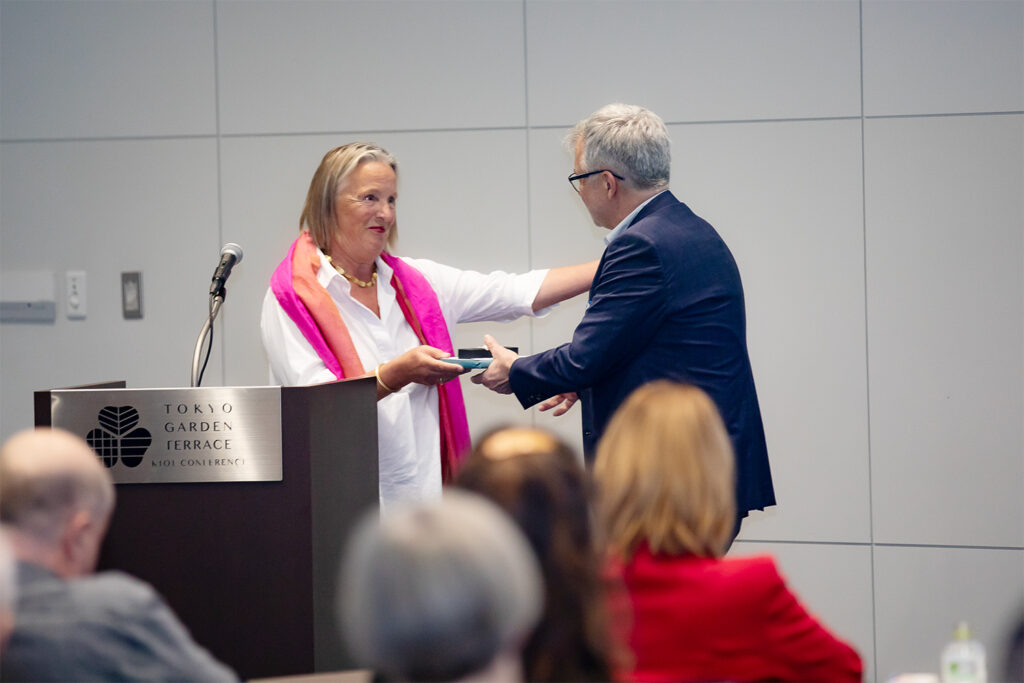
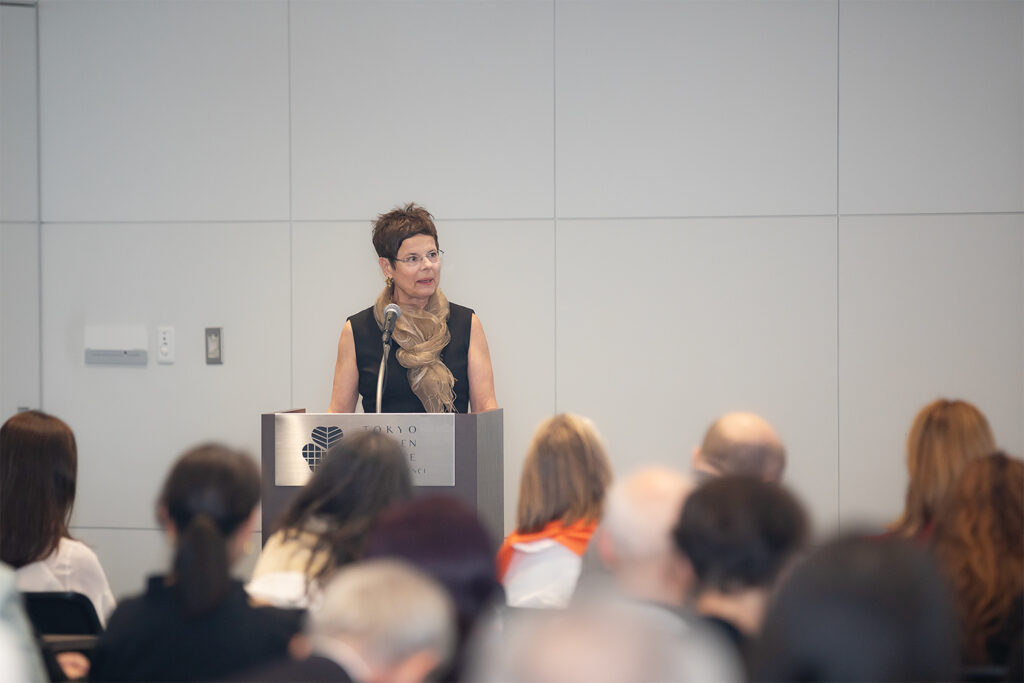
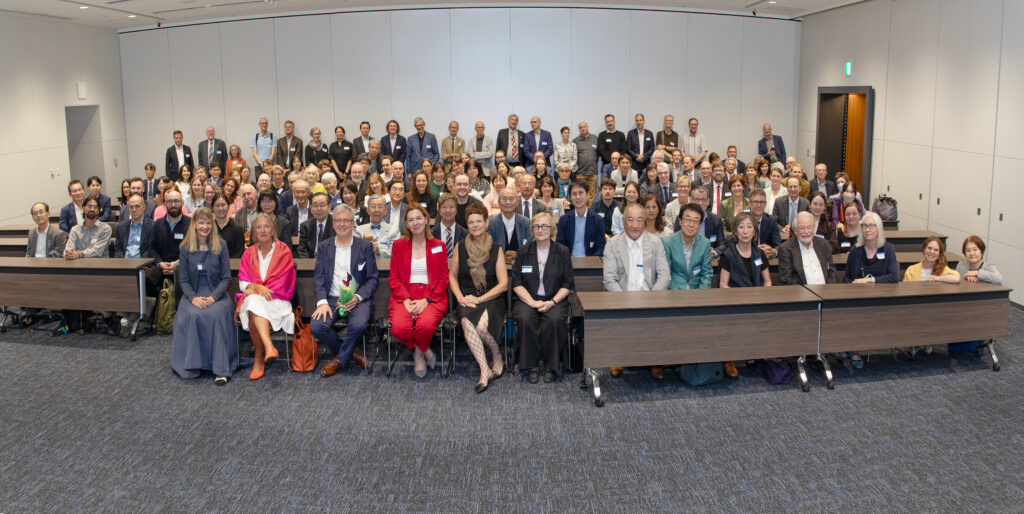
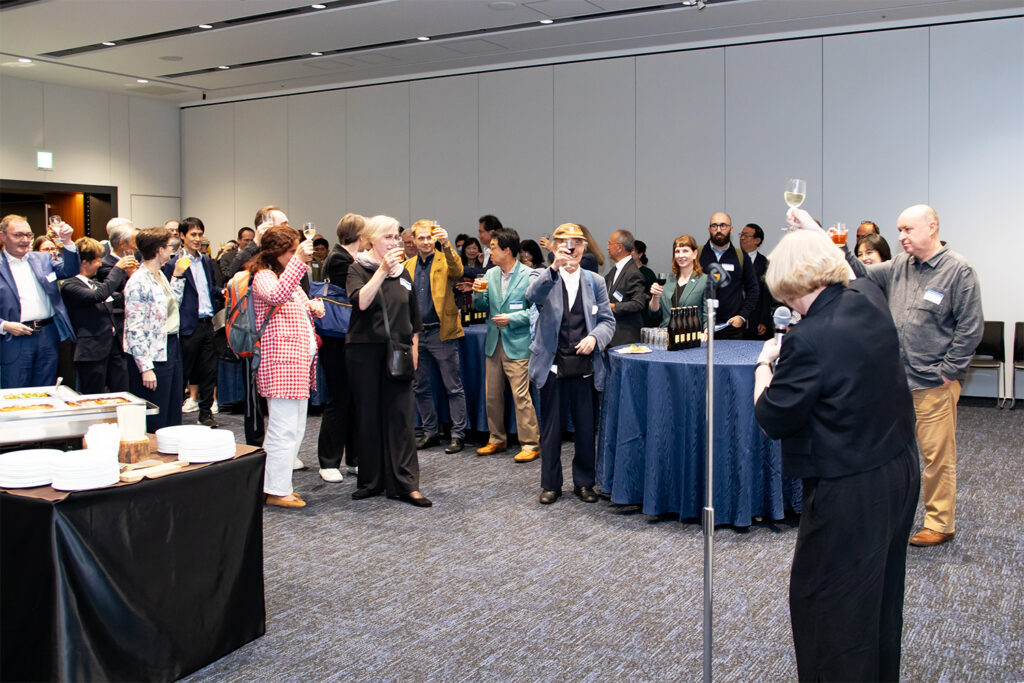
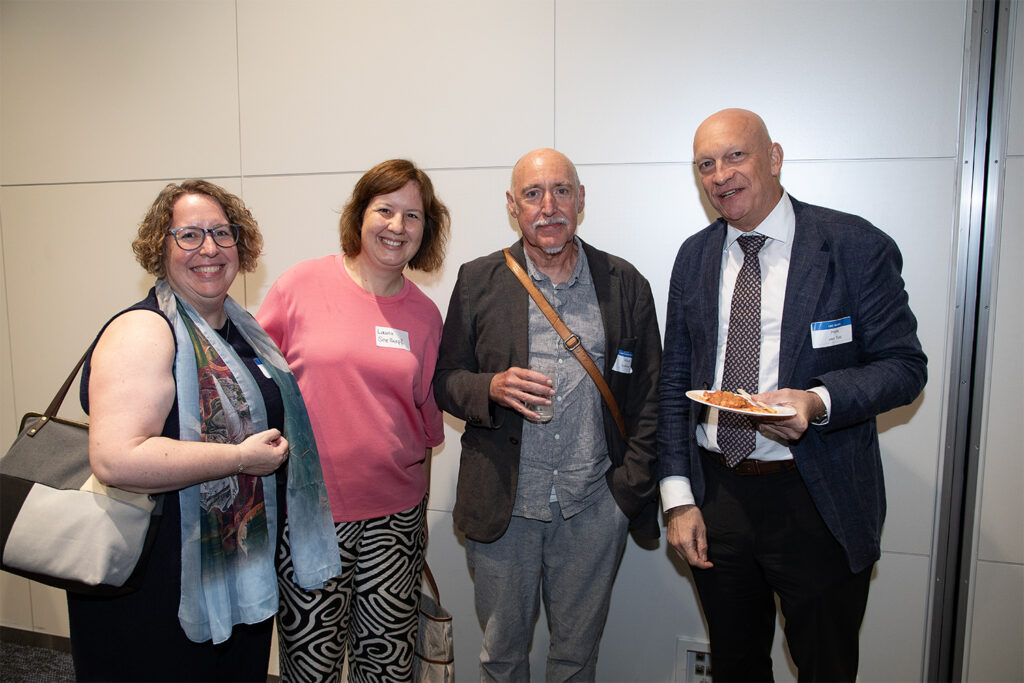
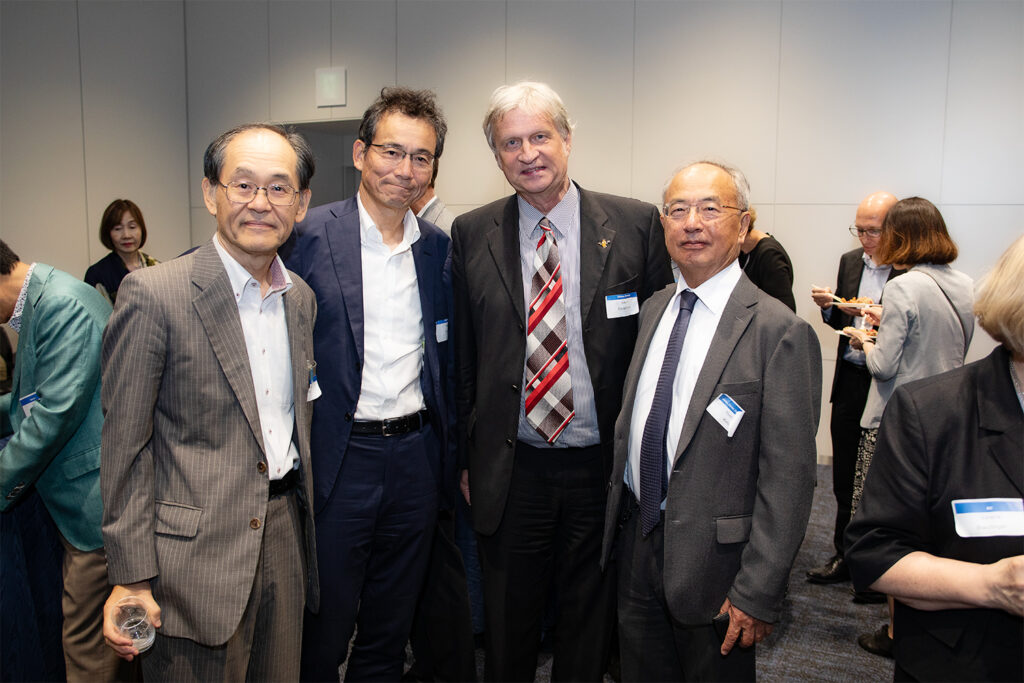
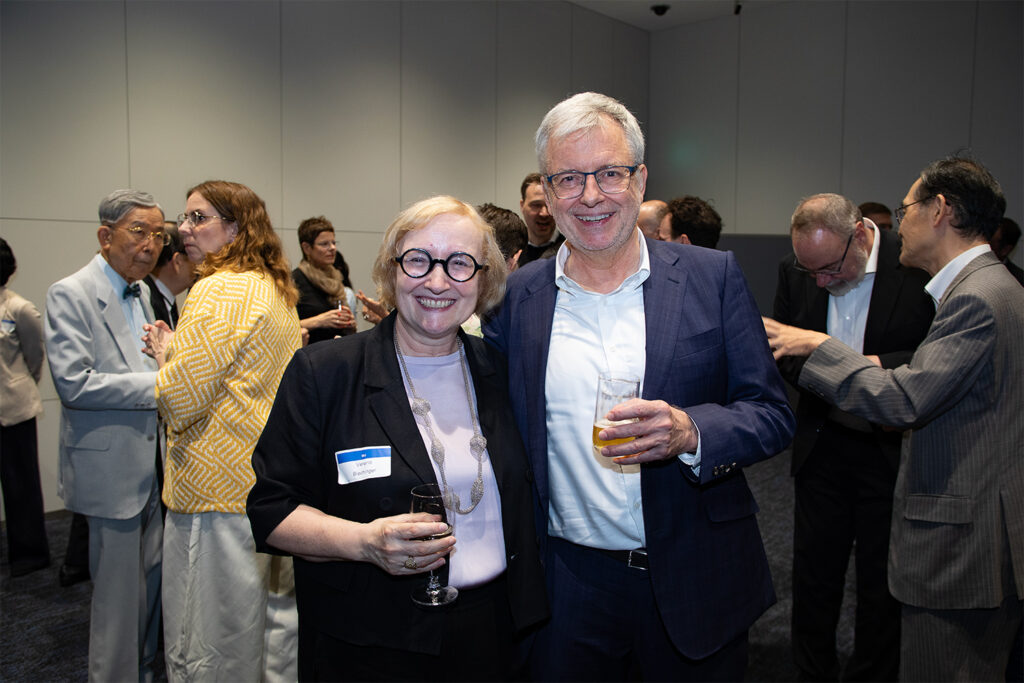
In their greetings, Petra Siegmund, Germany’s Ambassador to Japan, praised Waldenberger as a reliable partner of the German Embassy and his enthusiasm for exploring new fields of research together with German and international colleagues. Ute Frevert, President of the Max Weber Foundation, emphasised that Waldenberger had excelled in the two key tasks of Max Weber Foundation institutes, namely to build good relations with Japanese researchers as part of science diplomacy and to internationalise German scholarship and science. In her concluding remarks, Sabine Frühstück, Chairperson of the DIJ advisory board, congratulated Waldenberger on not only having defied the conventions of Japanese Studies but also on having succeeded in overcoming the limitations of Economics. Waldenberger had “complicated, enriched, broadened, and globalised the production of knowledge” at the DIJ under his leadership. After the lecture, Verena Blechinger-Talcott, successor to Franz Waldenberger as DIJ director, proposed a toast of thanks and praise for Waldenberger’s academic career and the DIJ’s development under his directorate. More than 140 staff, supporters, and friends of the DIJ celebrated the evening together with Franz Waldenberger.
Photos by Dermot Killoran (Calderwood Images)