

Download
Venue
DIJ Tokyo (access) and online
Registration Info
This is a past event. Registration is no longer possible.
This is a public event. Please be aware that audio-visual recordings may be made, stored, and published during and after the event.
 Follow us on Bluesky.
DIJ Mailing Lists
Please subscribe below to stay informed about our research activities, events & publications:
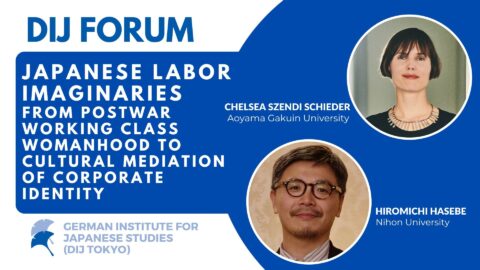
Japanese Labor Imaginaries: From Postwar Working Class Womanhood to Cultural Mediation of Corporate Identity
June 2, 2026 / 18.30 – 20.00 (JST) and online
Chelsea Szendi Schieder, Aoyama Gakuin University
Hiromichi Hasebe, Nihon University
Moderated by Nicole M. Mueller, DIJ
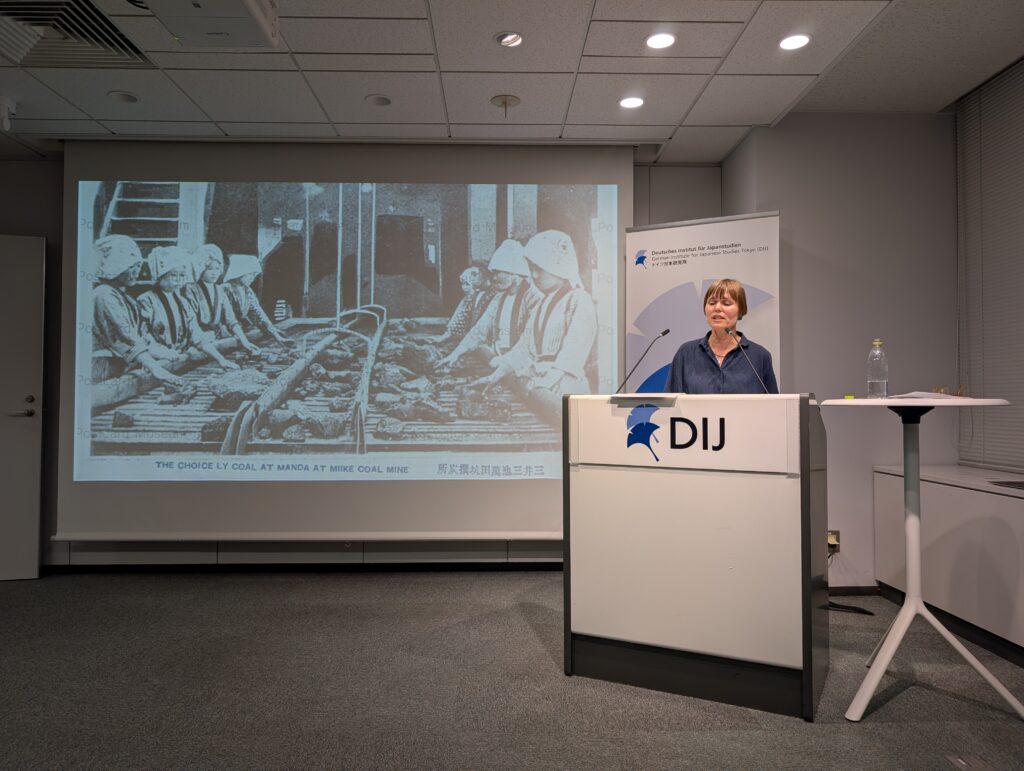
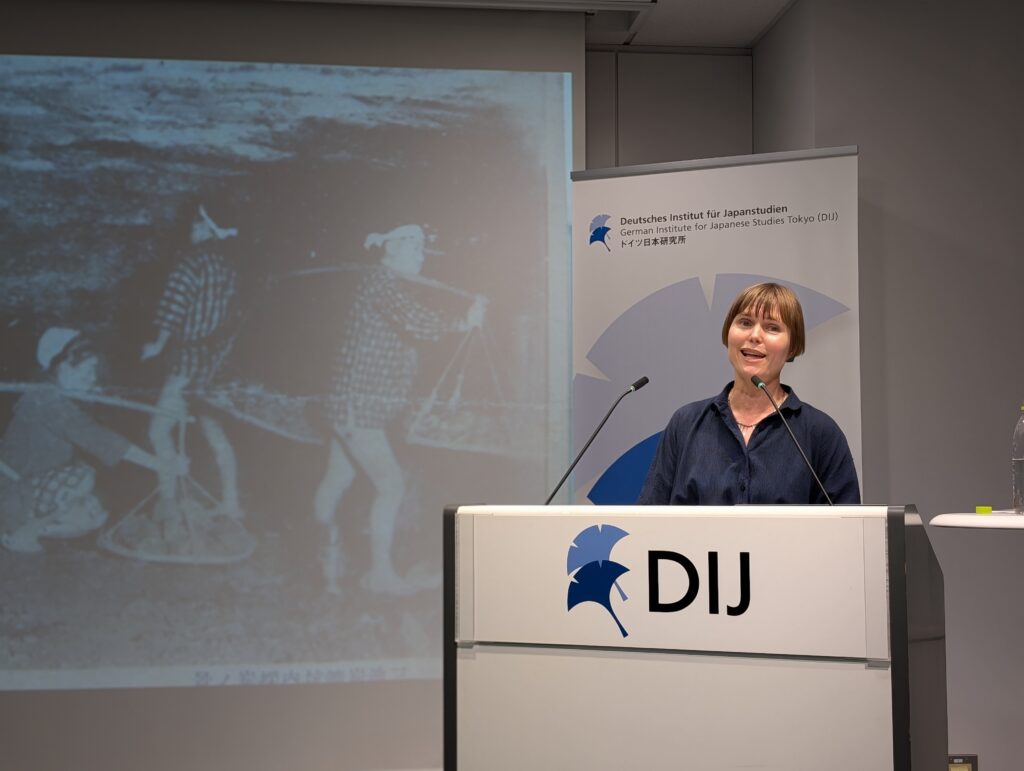
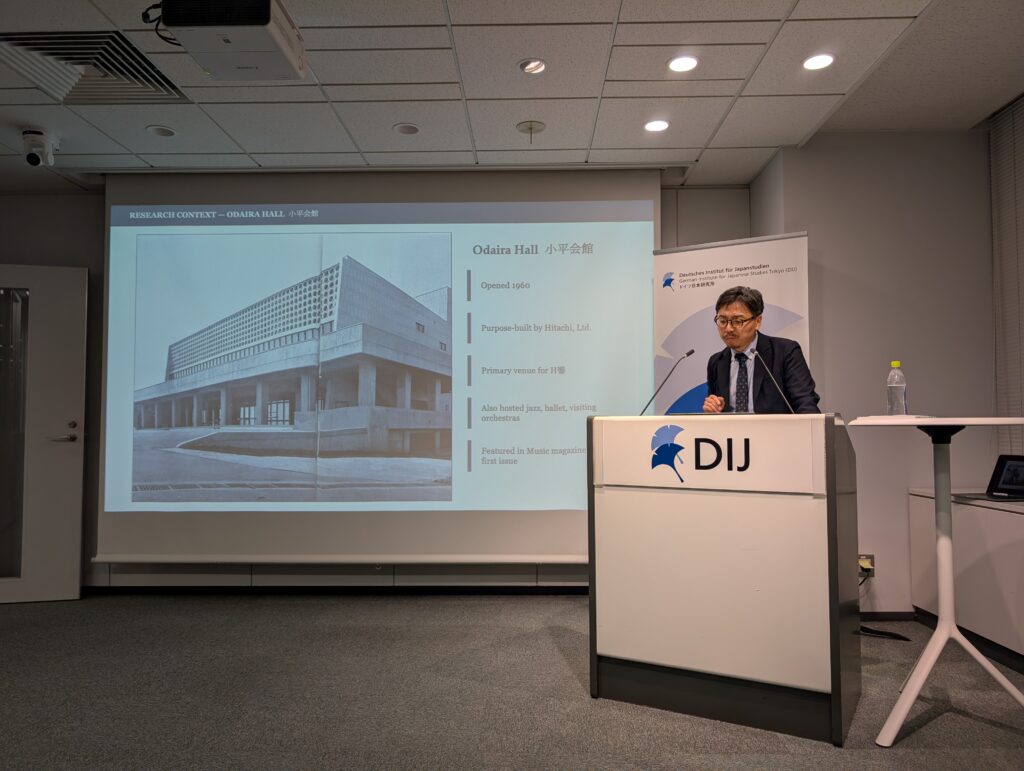
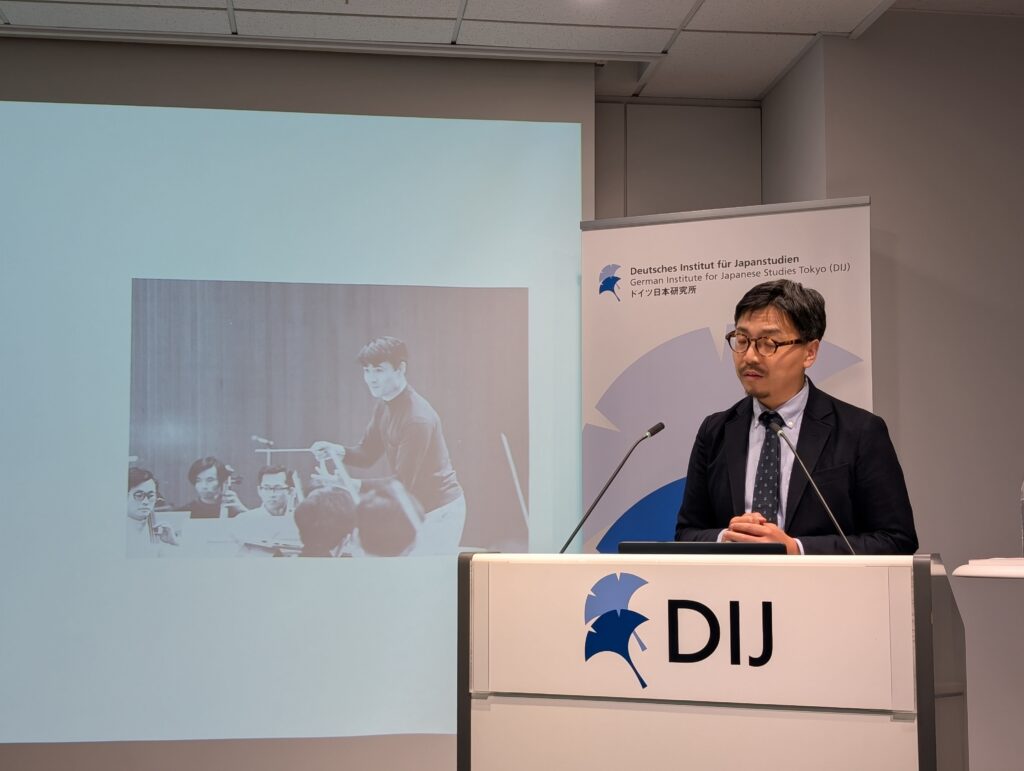
A video of this event is available on the DIJ’s YouTube channel here
Popular imaginations of Japanese society are deeply intertwined with work, often oscillating between stark stereotypes of the exhausted salaryman and idealized concepts of optimization (kaizen) or life purpose (ikigai). While work has been a celebrated pillar of Japan’s postwar identity, it has also faced scrutiny for fostering inequality and precarity. Today, as demographic pressures and rapid automation push the country to a societal crossroads, Japan serves as a critical bellwether for nations navigating similar global transitions. Beyond the familiar tropes, our keynote speakers unpacked the complexities of Japanese labor history and corporate culture.
Chelsea S. Schieder presented her research on the 1971 Mitsui Miike coal mine lawsuit following Japan’s largest postwar industrial accident. Initiated by miners’ wives and spanning nearly three decades, her talk highlighted this vital archive of working-class women’s frequently neglected perspectives on gendered labor. Shifting the focus to the everyday intersection of corporate life and culture, Hiromichi Hasebe explored how Hitachi corporation actively shaped organizational identity through its in-house magazine, Music. Going beyond the traditional narrative of corporate histories, Hasebe illustrated how company media functions as essential infrastructure designed to culturally embed employees within the fabric of corporate life. Together, these presentations provided a nuanced re-evaluation of how Japan’s labor landscape from postwar factories to today’s AI-powered workplaces, continuously negotiates the meaning of work.
Chelsea Szendi Schieder is Professor in the College of Economics at Aoyama Gakuin University in Tokyo. She writes about protest, women, violence, and Japan for academic and general audiences. Her 2021 book Coed Revolution: The Female Student in the Japanese New Left (Duke UP) contextualizes the gendered meaning of the female student activist in postwar Japanese society and social movements. It became the basis for a fictionalized graphic novel both in French and English (forthcoming). She also works as a curator, and is a section editor of the Asian Journal of Women’s Studies. Her current monograph in progress is on gendered work, disability, and justice at the Miike coal mines.
Hiromichi Hasebe is Associate Professor of Business Administration at the College of Commerce, Nihon University, Tokyo. His research lies at the intersection of business history, organizational theory, and the sociology of technology, with a focus on rhetorical history, corporate memory, and innovation processes in Japanese firms. His recent work examines how corporations such as Sony, Panasonic, or Kyocera reconstruct their past to shape organizational identity and strategic decision-making. His publications have appeared in leading Japanese academic journals, including Soshiki Kagaku and Keiei Shigaku.