
Download
Venue
DIJ Tokyo (access)
Co-organizers


Registration Info
This is past event. Registration is no longer possible.
Please be aware that audio-visual recordings may be made, stored, and published during and after the event.
 Follow us on Bluesky.
DIJ Mailing Lists
Please subscribe below to stay informed about our research activities, events & publications:
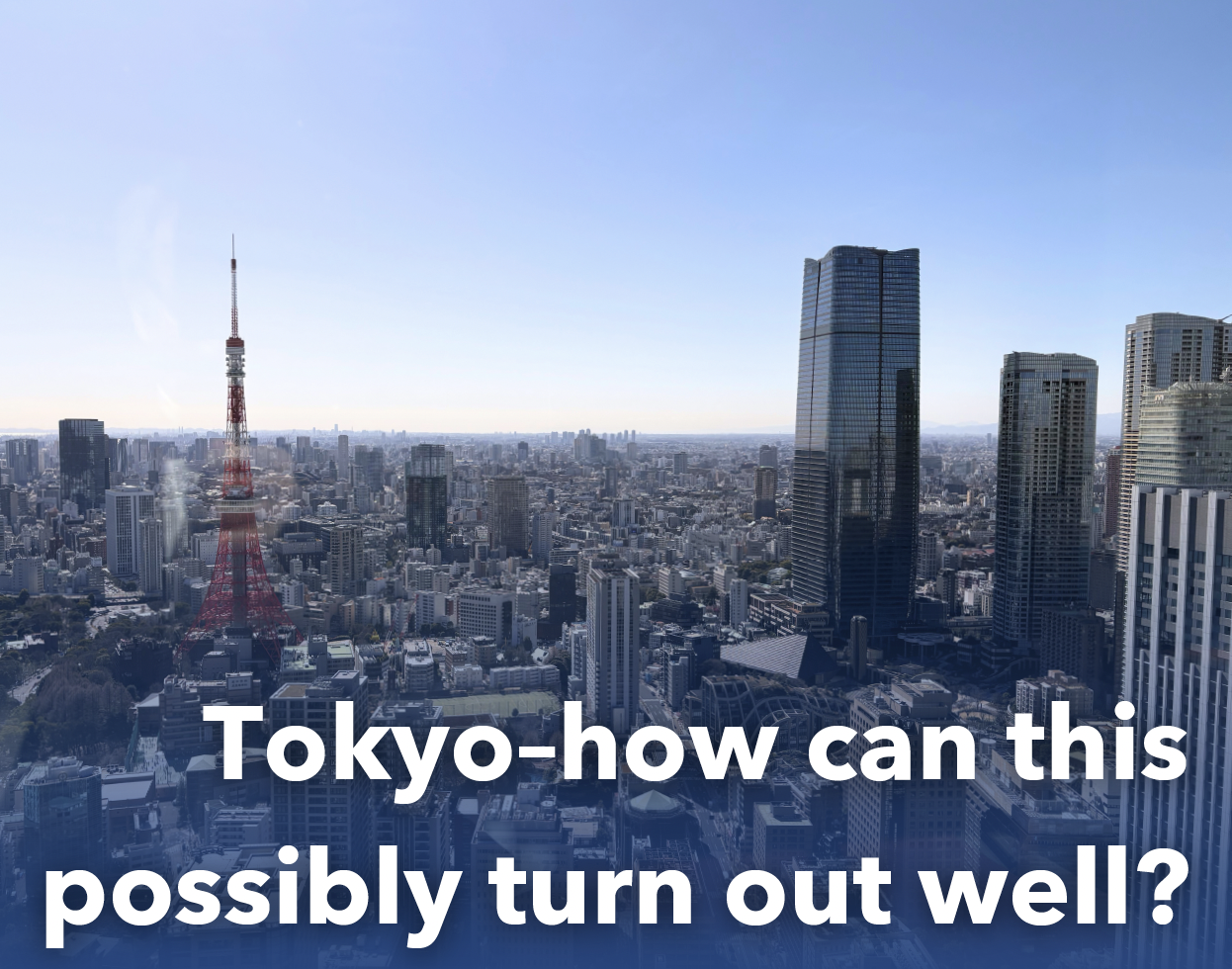
Tokyo - how can this possibly turn out well?
June 3, 2026 / 18:30-20:00
Franz Waldenberger, DIJ Tokyo

Contemporary Tokyo Seminar Series
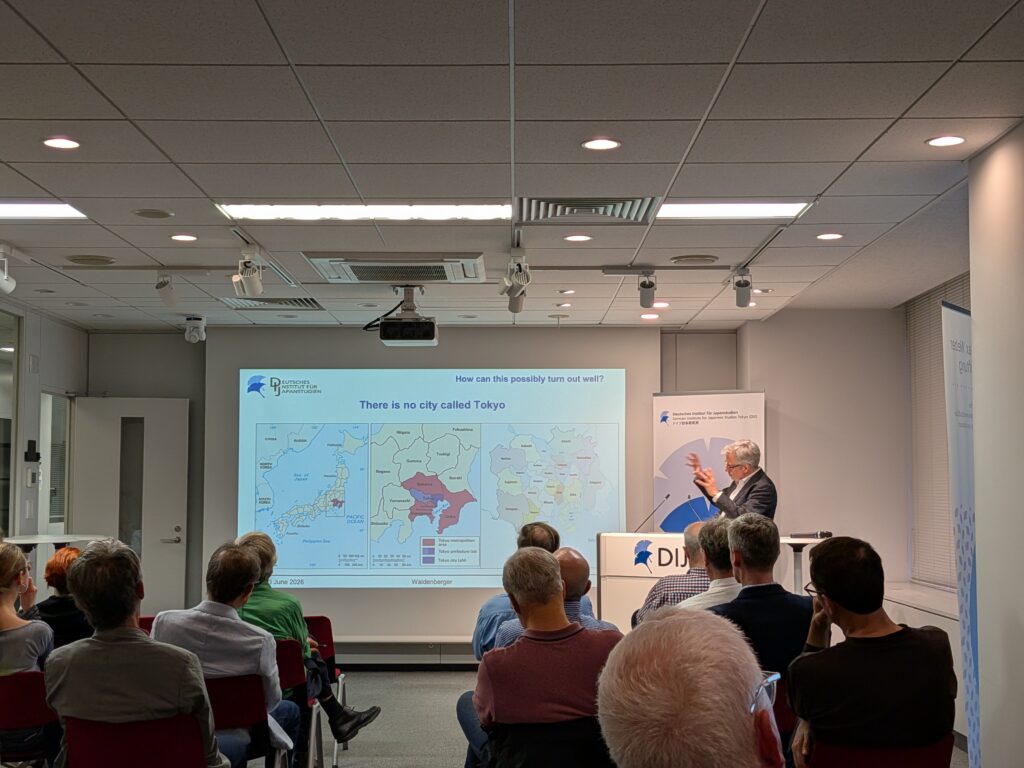
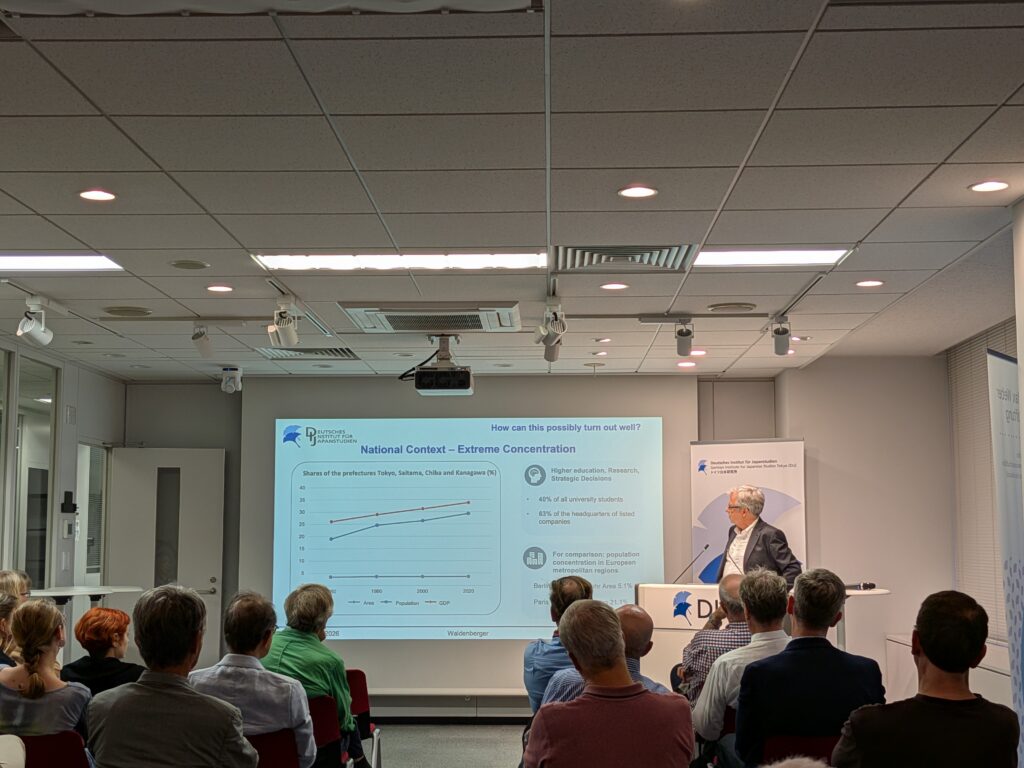
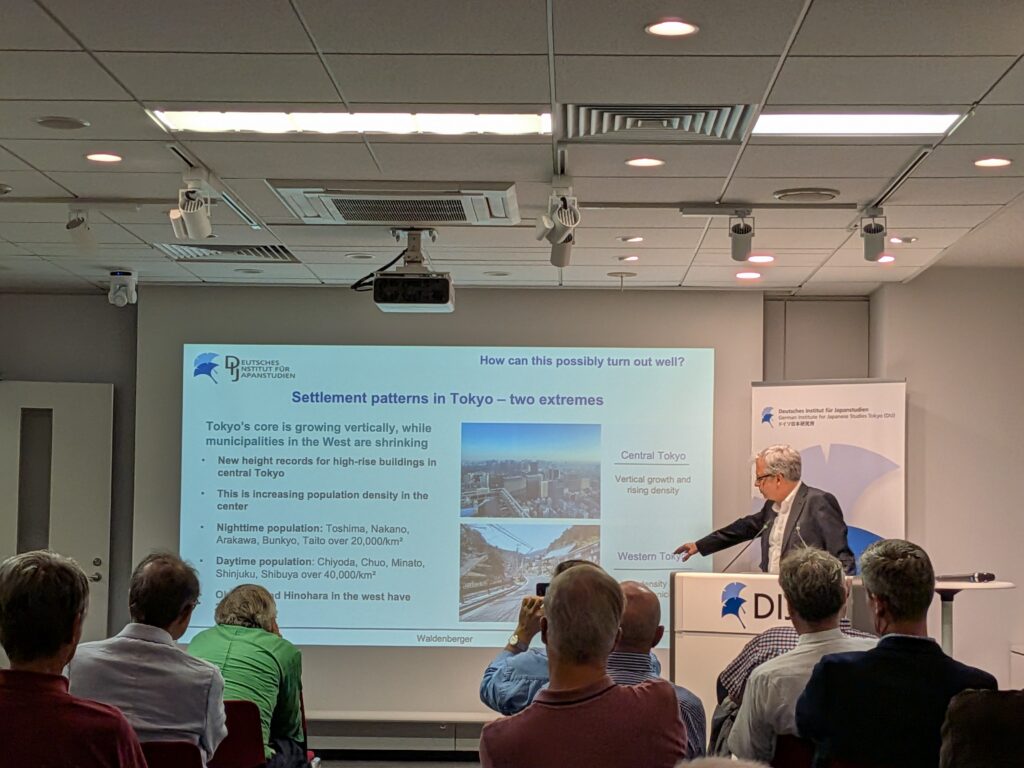
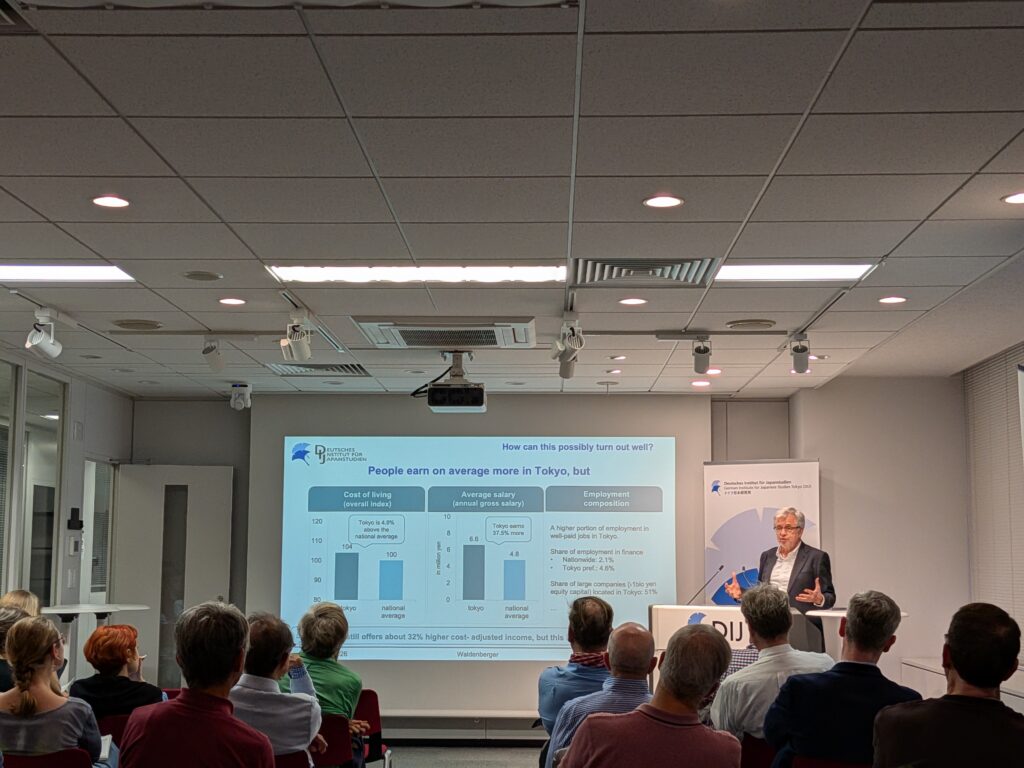
Administratively, Tokyo is no longer a city, but a metropolitan prefecture. It continues to attract a disproportionate share of Japan’s university enrollments and corporate headquarters, outpacing comparable European mega-cities in terms of functional concentration. While the overall population has risen modestly over the past five years, growth is uneven: Central wards continue to densify, whereas peripheral villages experience stagnation or decline. Demographically, the city is aging; the proportion of residents over 65 is markedly high and continues to increase, indicating limited rejuvenation from natural population change. Consequently, net growth is driven primarily by migration from other regions. Vertical expansion characterizes the core, with daytime densities in key business districts far exceeding those of suburban areas, while the western fringe remains sparsely populated.
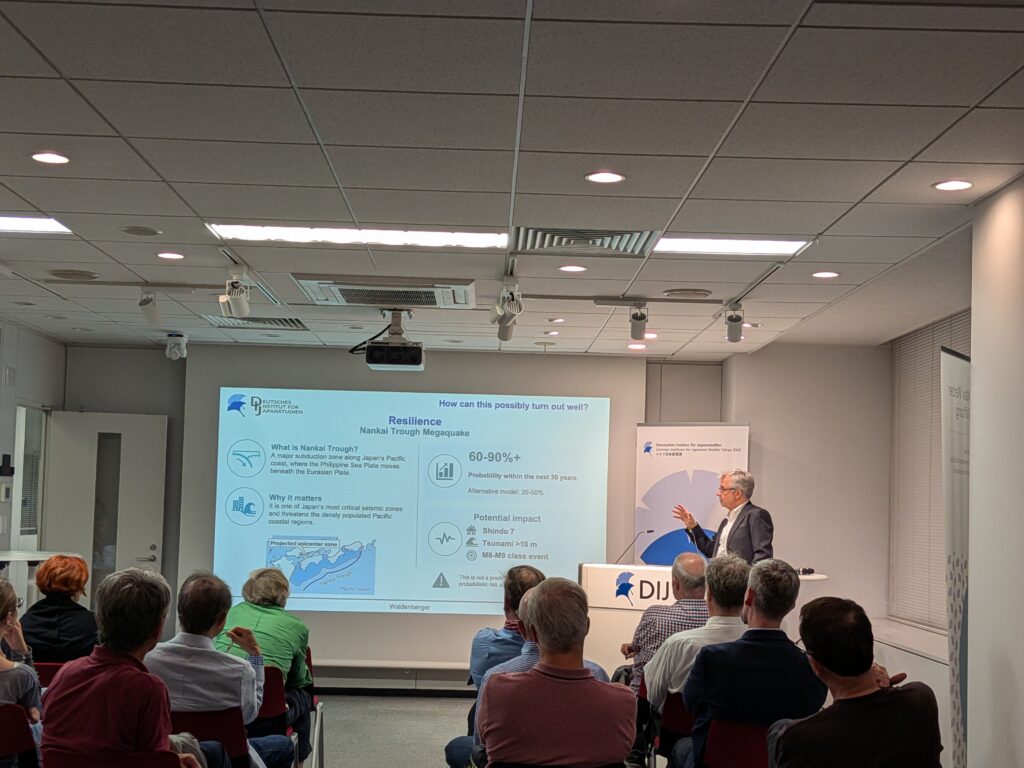
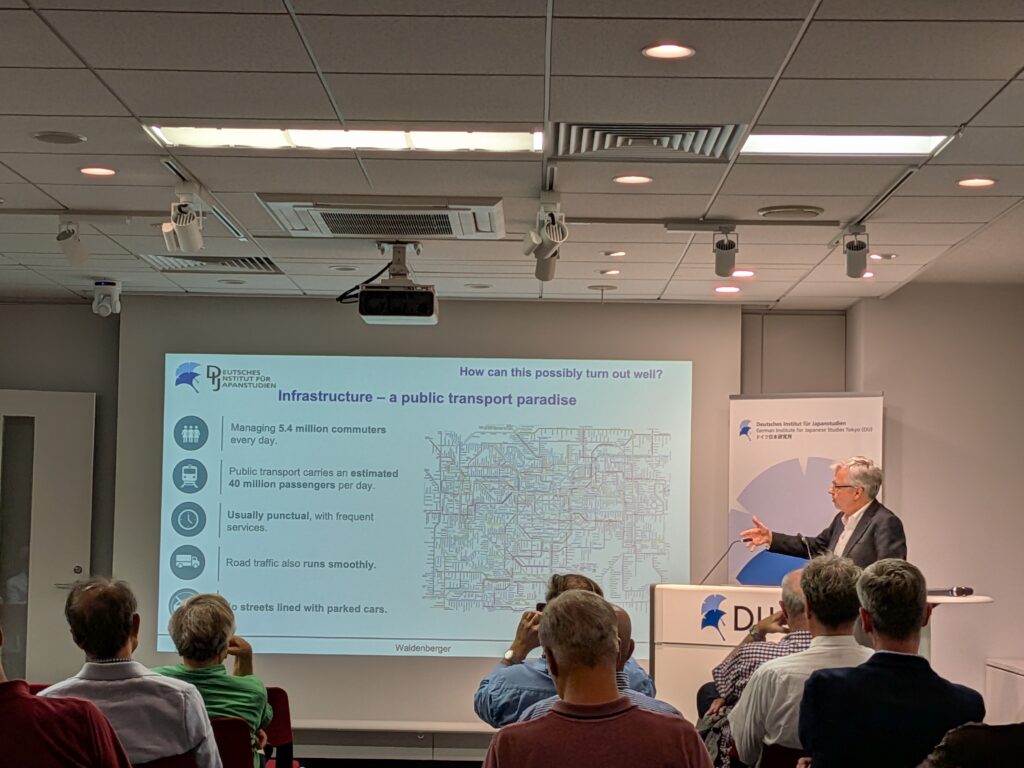
Large‑scale infrastructure projects proceed on schedule, and the public‑transport network routinely handles tens of millions of passenger trips daily with high punctuality. Air quality measurements place Tokyo among the cleanest major cities, a result of an active cap‑and‑trade system that has already surpassed early emission reduction targets. Resilience strategies encompass the world’s largest underground flood control system and AI‑driven sea level projections that anticipate substantial future impacts, prompting a multi-billion-yen investment program to enhance seismic safety, coastal protection, and energy communication continuity, including outreach to foreign residents.
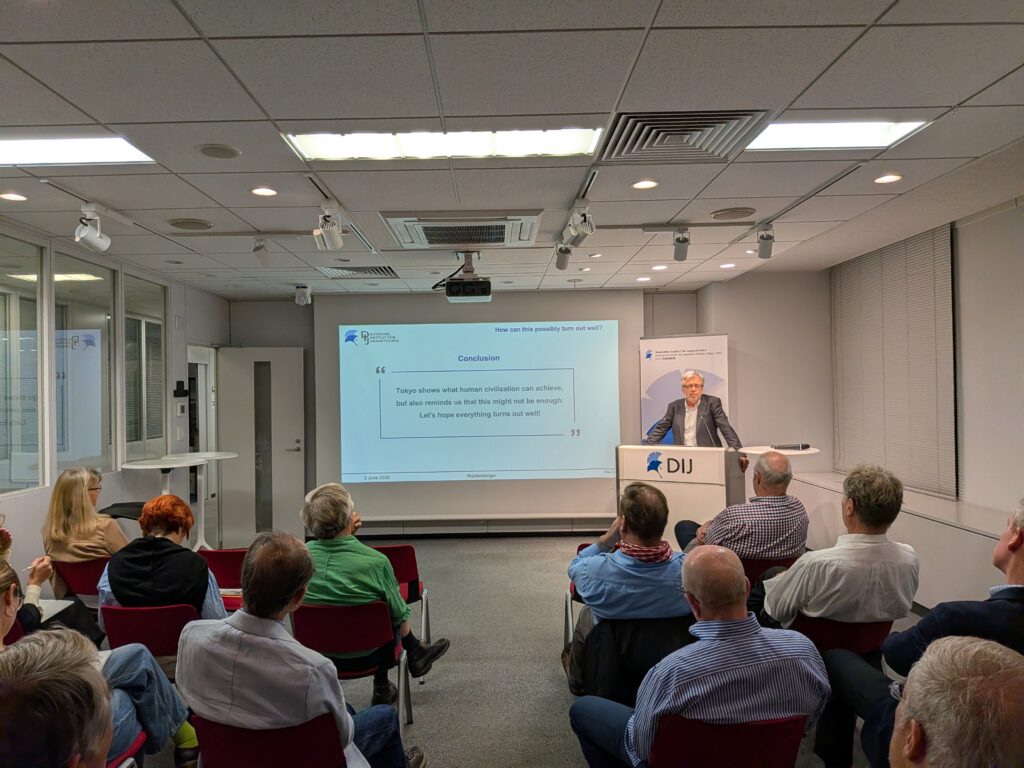
Exploring these themes, this talk demonstrated how hyper‑concentrated mega-cities can sustain functionality and adaptability through coordinated governance, technological innovation, and proactive risk mitigation, offering valuable insights for other rapidly urbanizing regions.
Moderator: Barbara Holthus (Deputy Director, DIJ Tokyo)
Franz Waldenberger is Director of the German Institute for Japanese Studies (DIJ) in Tokyo. He is on leave from Munich University where he holds a professorship for Japanese Economy. His research focuses on the Japanese Economy, Corporate Governance and International Management. He is editor in chief of the international peer reviewed journal Contemporary Japan. His most recent publications include the co-authored open access book Unleashing Innovation the East Asian Way. Startup Ecosystems in Japan, South Korea and China (Springer, 2026) and “The impact of demographic change on aggregate final consumption: Japan’s experiences and prospects from a national accounting perspective” (The Journal of the Economics of Ageing, Vol. 34, June 2026).