イベント&アクティビティ
Living Diversity: A Comparative View on Identity, Gender and Sexual Orientation in Contemporary Japan and Germany

Homogeneity is a myth. Diversity, on the other hand, has become a buzzword in Japan and elsewhere. It can be understood as both a chance for society to become more open and tolerant, or as a risk to grow heterogeneity and inequalities.
This panel discussion will reflect what diversity means for a society and how this is connected to the reality of everyday life. By focusing on issues of identity, gender and sexual orientation in Japan, Germany and beyond, we bring together two activists and a scholar who address multiple dimensions of diversity.
Culture at work. On the interplay of cultural change and job satisfaction in a Japanese multinational company

Job satisfaction in Japan has become a widely-debated issue, especially since research findings indicated that it ranks among the lowest in the world (e.g. Hipp and Givan Kolins 2015).
Moreover, surveys suggest that compared to other aspects of life, such as family or education, Japanese are least satisfied with their working lives (Holthus et al. 2015).
At the same time, global megatrends and market forces are reshaping Japanese workplaces, for example in the form of international mergers and acquisitions, which lead to direct confrontations of different cultures and elicit inevitable changes to the existing work culture. So far, however, the implications of such changes for organizational cultures and employee satisfaction have rarely been addressed in qualitative research. My study aims to provide a deeper understanding of the interrelations between job satisfaction, globalization and culture and asks to what extent job satisfaction interacts with and depends on culture.
書籍共同展示
幕末の日本

大政奉還から150年。
1853年のペリー来航から1867年の大政奉還までの間に繰り広げられたヨーロッパ、北米などの国々と幕末日本の歴史を示す資料を各館で展示します。
展示内容・入室等のお問い合わせは各図書室にお願いいたします。
Humans & Machines in Medical Contexts: Case Studies from Japan
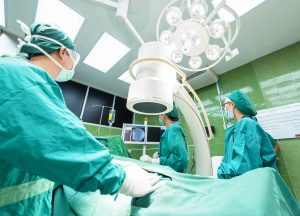
Medical instruments and technologies can be used to manipulate the human body, ranging from general devices with extremely low risk to such ones highly invasive to patients. Many technologies and electronic appliance nowadays in use; however, took their roots in the second half of the 19th century and increasingly merged into clinics and hospitals during the following century. At present, there can be observed a thrust of technological progress at high pace in the field of biomedical engineering and medical informatics, which contribute additionally to new configurations in in the human-device interplay in Japan.
In order to explore the issues arising from the clinical practices vis-à-vis applications of the (then new) medical devices”, the workshop casts light on their various aspects. The participants will address features regarding the historical, legal, socio-structural, engineering and bioethical conditions and consequences of the interplay between humans and medical technologies or instruments, respectively health care practices in contemporary Japan.
Towards an Intellectual History of Japan’s 1980s Bubble Culture and Economy
In the popular imagination of contemporary Japan, the so-called ‘Bubble Economy’ of the late 1980s has become a place of nostalgia by itself. In it, the 1980s live on as a spectacular feast with endless excitement and seemingly bottomless resources, while contemporary Japan seems mired in dearth and boredom of the everyday. Of course, things were not quite what they seem, as 1980s Japan was also a deeply neurotic society, beset by anxieties and fears that were shared by many cold-war societies, but in part also entirely local. Thus, studies of the culture of the period either focus on the sense of loss and of nostalgia for vanishing traditions (whatever their claims to authenticity) or on the relentless commodification that went hand in hand with it but seemed strangely disconnected.
The Status of Japanese Career Women in their Professional and Private Life

Not that long ago, the term “Japanese career women” almost had been a contradiction in itself. Times have changed and Japanese women pursuing a career is a much talked about topic in politics (“womenomics”) and the media. But has the situation really changed for career women “on the ground”? What are their opportunities and what are their challenges? To what extent are profes-sional expectations and expectations in their private life contradicting each other? And finally, are contradicting expectations resulting in identity conflicts and what are the strategies to cope with these conflicts?
These are questions to be addressed in the presentations. The presentation by Markus Pudelko is based on more than 70 interviews that he has conducted in Japan over the course of several years.
エネルギー転換 (Energiewende) ― ドイツと日本のエネルギー転換の未来
ドイツ語で“Energiewende”と呼ばれる「エネルギー転換」とは、電力・熱・交通部門での化石燃料や原子力の使用からの脱却と、エネルギー効率を改善しながら自然エネルギーへの移行を図る政策・実践を示しています。
この共催イベントでは、ドイツと日本のエネルギー転換の可能性と挑戦について議論されます。ドイツのシンクタンク、アゴラ・エナギーヴェンデからはディミトリ・ペシア氏、日本の自然エネルギー財団からは大林ミカ氏が登壇します。自然エネルギー財団とアゴラ・エナギーヴェンデは、3月頭に共同レポート『ドイツのエネルギー転換 10 の Q&A -日本への教訓』を公開したばかりです。
本イベントでは、まず、レポートの共同執筆者であるディミトリ・ペシア氏が、ドイツのエネルギー転換の最新事情についてお話します。つづいて、大林ミカ氏が、日本のエネルギー政策に関する話題提供を行います。そして最後に、質疑応答の時間を設けています。なお、イベント後は、軽食をご用意しています。
Are the elderly a cost factor for society or its safety net? A comparison of family regimes and National Transfer Accounts data in Germany and Japan
Various works have argued that ageing societies’ increasing dependency ratios provoke generational conflict over scarce financial resources. In post-industrial economies, younger cohorts face disadvantages in the labour market and regarding the generosity of the welfare state compared to previous generations. However, there has also been the tendency to alleviate these imbalances through informal inter-generational family transfers. Comparing Japan and Germany – two of the fastest aging societies worldwide – this presentation investigates whether and to what extent the family can serve as a bulwark against potential generational conflict.
With regard to demographic and household-financial dynamics and policy responses, the presentation will compare differences in the capacity of families to serve as an inter-generational safety net.


 Follow us on Bluesky
Call for Submissions
Contemporary Japan
current issue Vol. 38, No.2
Contemporary Japan is open year-round for rolling submissions, with accepted publications published immediately online. Please see the instructions for submission here.
DIJ Monograph Series
Our monograph series is  Open Access after a one-year embargo period. Downloads are available on our
→ monographs pages.
道案内
ドイツ-日本研究所
〒102-0094 東京都千代田区
紀尾井町7-1 上智紀尾井坂ビル 2F
道案内
+81 (0)3 3222-5077
+81 (0)3 3222-5420
dijtokyo@dijtokyo.org