Events and Activities
Negotiating Difference: Educational Experiences of Deaf and Hard-of-hearing Students in Mainstream Japanese Schools
Japan is part of a global trend in which enrollment in schools for the deaf is in decline due to a pedagogical shift: first towards ‘integration’ and later towards ‘inclusion’. As a result, it is rapidly becoming the norm for deaf and hard-of-hearing students in Japan to be educated alongside hearing peers rather than among deaf and hard-of-hearing ones. Comparative research suggests that these mainstreamed students face social neglect and isolation. Yet, as studies have shown, Japanese youth are not passive actors. They can work to actively interpret and transform their situation.
This presentation focuses on the results of a 15-month ethnographic study on young (18 to 24 year-old) Japanese self-identified ‘inte’ (a shortened version of the loanword for integration) who were educated in ‘hearing schools’.
Speaker:
Jennifer M. McGuire, Doshisha University
Between Contributor and Competitor: Recent Trends in how the Chinese Government views Japan
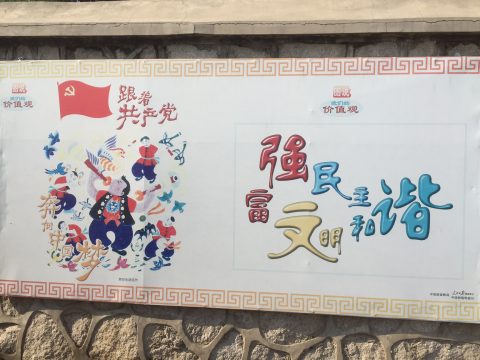 How the current Chinese leadership views Japan is not just a question concerning both major countries in East Asia. It is also interwoven with a series of Chinese domestic troubles and crises: how to deal with Japan both as a major contributor to the industrial upgrading of the Chinese economy and as an essential competitor in Asia and beyond; how to handle Tokyo in the light of its ever closer alliance with the United States which aims at containing China’s rise; how to fulfill, in the light of these constraints, the superpower promise that the Chinese Communist Party (CCP) has given to the Chinese people.
This presentation will outline Beijing’s internal predicaments and its changing perspectives on Japan. It will also address Chinese concerns about Japanese efforts to involve a growing number of European countries into the geopolitical competition with China, for example in the South China Sea.
Speaker:
Shi Ming, Berlin
Bullseye view: Developing a sociological method for studying happiness
 Happiness research has gained tremendous popularity, yet research by anthropologists and sociologists trails behind in comparison to economists and psychologists. A sociological study that aims to understand the multidimensionality of happiness in Japan by focusing on a culture-sensitive understanding of happiness remains a desideratum. Therefore we developed a three-partite approach to studying happiness and life satisfaction: (1) word association, (2) in-depth conversation on happiness and life satisfaction issues using a bullseye-structured chart, which we refer to as “board game”, with tokens for visualization of dimensions’ overall importance, and satisfaction and dissatisfaction with them, (3) three quantitative questions on happiness, followed by in-depth discussion to tie to the multitude of existing quantitative studies. To test the methodology, we conducted 23 semi-structured interviews with Japanese men and women in rural Japan. We find that happiness is multidimensional, is an interpretative process, varies over the life course, and that the desire to maximize happiness is not universal. We argue to have created a methodology which we believe can be modified to be used in any country and with diverse population groups, while remaining culture-sensitive throughout.
DIJ in Austrian TV report “Olympia 2020: Adventure Tokyo”
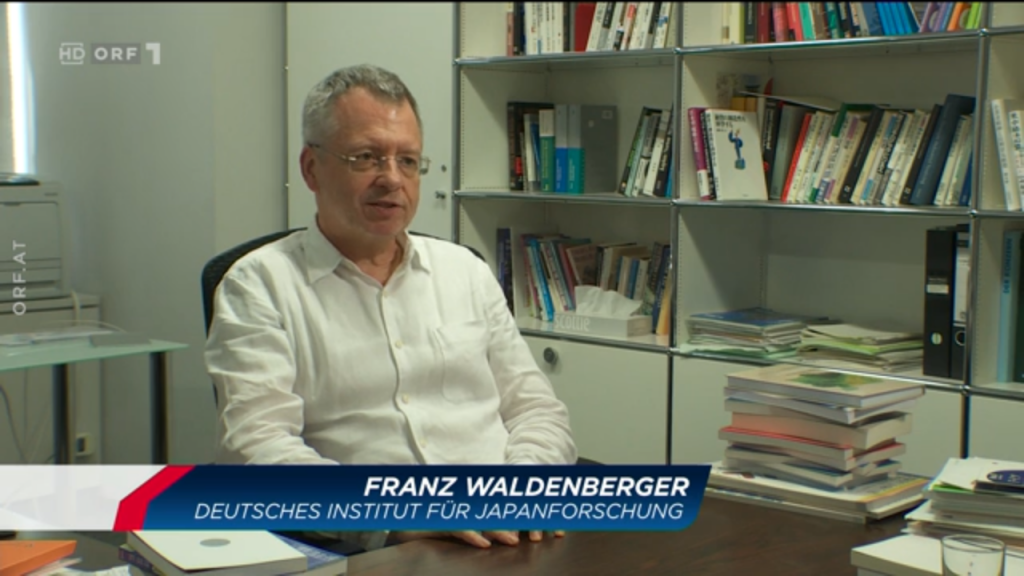
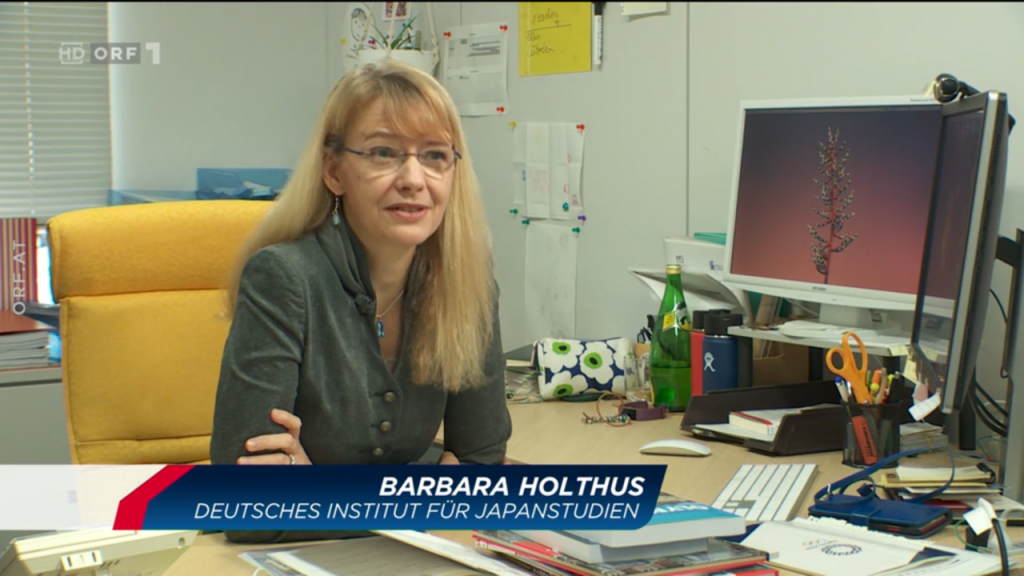
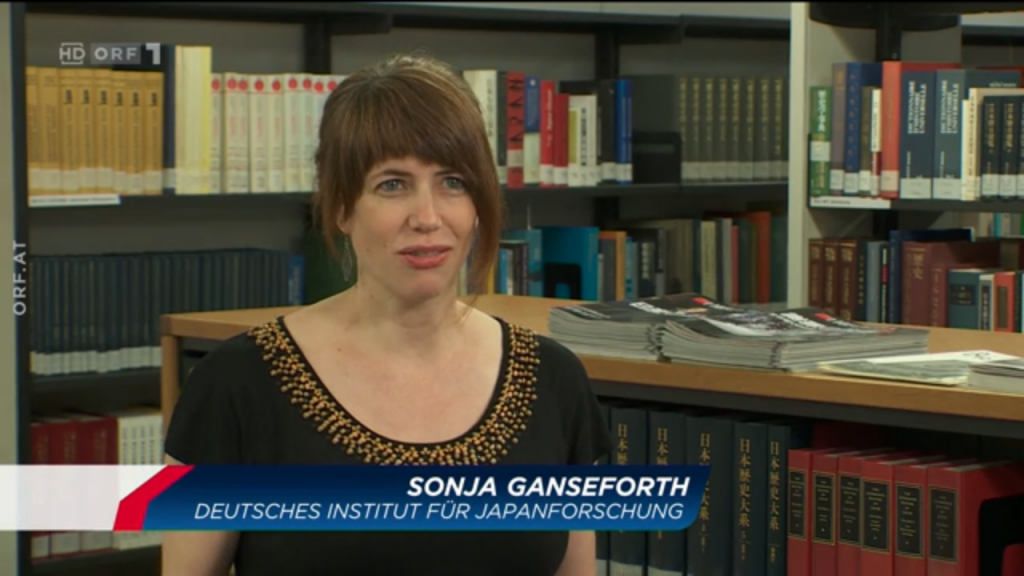
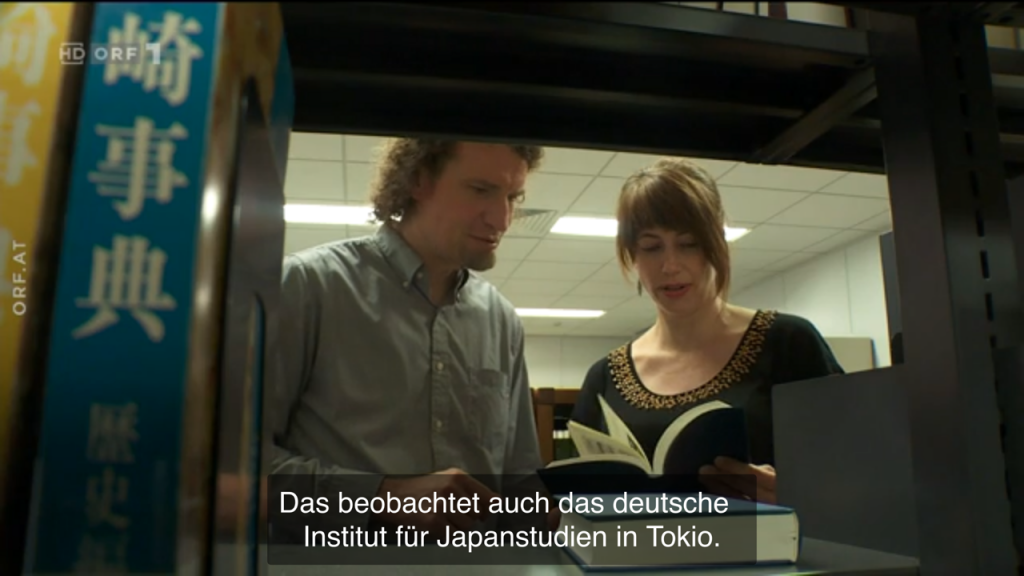
Franz Waldenberger, Barbara Holthus, and Sonja Ganseforth appeared in an Austrian TV report on the 2020 Tokyo Olympics. They provided expert commentary on Japan’s Olympic legacy desires, anti-Olympic protests, and the Olympic agenda on diversity. The report was broadcast by the Austrian public TV station ORF during their flagship sports program “Sunday Sports” (in German) on June 16th.
The DIJ currently prepares a book covering a wide range of topics related to the Tokyo Olympics. Its tentative title is “Japan through the lens of the Tokyo Olympics” and it is due to be published in January 2020.
Local Responses to the Revision of the Seed Law: The Seed Registration System, GMOs and Rice
In January of 2018, the Japanese legislature abolished its 1952 Seed Law, which provided the legal basis for local agricultural committees that provide assistance to rice farmers including help with seeds, seed planting and nearly all aspects of rice farming. The abolishment of the law is related to a number of other key shifts currently at play in Japanese politics, including the reform of JA Zenchu (Japan Agriculture, the National Central Union of Cooperatives) and power shifts within the bureaucracy alongside international trade commitments. Consumer groups, especially those concerned with genetically modified organisms (GMOs), advocates for sustainable farming practices and those that insist on local control over food, argue that these changes may open rice farming to corporate control, including foreign ownership.
This research begins by examining the landscape of international legal frameworks related to GMOs and the domestic context that influenced changes occuring in agricultural policy including the repeal of the Seed Law.
Speaker:
Nicole L. Freiner, Bryant University
Making the Most of Scarcity? The Role of Natural Assets in Pre-WWII Japanese Economic Development
What role did natural assets play in the rise of living standards in industrializing nations during the 19th and 20th century? In the case of Japan, initial conditions were characterized by an exceptionally efficient use, by the international standards of the time, of very scarce natural resources, particularly in forestry and silviculture (Totman 1989; Saito 2009, 2014). In spite of their scarcity, natural assets played a critical role in the initial phase of Japanese economic transformation, in the late Tokugawa and early Meiji. In this paper, we estimate the evolution of the comprehensive wealth, the total stock of assets per capita, which includes human and natural assets, and can be regarded as the most relevant indicator of sustainable well-being (Dasgupta 2001, 2009).
Speaker:
Jean-Pascal Bassino, ENS Lyon; CNRS research fellow at the French Research Institute on Japan at Maison Franco Japonaise
Farmers, Local Agency, and the Development of Peri-Urban Spaces
This study provides a comprehensive examination of the postwar history of the Atago Mountain area as a mirror to reflect and interpret broader changes affecting peri-urban spaces in Japan. The Atago Mountain area is located on the outskirts of Kofu City, the capital of Yamanashi Prefecture. As with many other similarly-sized communities across Japan, the area changed from a rural into a peri-urban community over the postwar period. Once known for timber production, farmers have transitioned through a number of agricultural crops including mulberry, peaches, kiwi, table grapes, and grapes for wine. Agricultural land was also sold, and replaced with higher-end housing, now often unoccupied. A children’s museum was built. Grape tourism establishments and wineries went out of business. Solar panels, abandoned fields, and prefabricated apartments have split up the remaining farmland, which continues to form the foundation for the livelihoods of a shrinking number of local farm households.
Technologies of Presence: Modeling Emotion in Robots with Heart
Intersections between entertainment industries and artificial intelligence research in Japan have resulted in a growing interest in modeling affect and emotion for use across a variety of media platforms, including wearable devices, virtual reality, and in particular companion robots. Combining advances in computing with market explorations in technologies of care and companionship, the most recent social robots created for popular consumption in Japan augment a sense of presence and intimacy by literally giving these platforms a face. This attention to the design and ascription of agency to media technologies enables a feeling of co-awareness that incorporates non-human entities into the social network of relationships. Moreover, as these robots connect human users while also inviting them to interact directly with robot bodies via tactile features such as furry bodies and wagging tails, with sensors connected to cloud-based artificial intelligence, they not only facilitate affective interactions but also enable the collection of new kinds of emotional data.
Speakers:
Daniel White, Freie Universität Berlin
Hirofumi Katsuno, Doshisha University
Please note, this Social Science Study Group will take place on June, Monday 3rd



 Follow us on Bluesky
Call for Submissions

Contemporary Japan
current issue Vol. 38, No. 1
Contemporary Japan is open year-round for rolling submissions, with accepted publications published immediately online. Please see the instructions for submission here.
DIJ Monograph Series
Our monograph series is  Open Access after a one-year embargo period. Downloads are available on our
→ monographs pages.
Access
DIJ Tokyo
Jochi Kioizaka Bldg. 2F
7-1 Kioicho Chiyoda-ku, Tokyo
102-0094 Japan
Where to find us
+81 (0)3 3222-5077
+81 (0)3 3222-5420
dijtokyo@dijtokyo.org

DIJ-ARI Asian Infrastructures Research Partnership