Veranstaltungen und Aktivitäten
Changing Gender Orders and Diversity in Comparative Perspective: Growing Flexibility of Work and Life Strategies
Our speaker, Ilse Lenz, will compare the two conservative gender welfare regimes of Germany and Japan by examining convergences and differences and discuss the main characteristics and the scale of these transformations.
“In most postindustrial societies, we presently experience a transformation from a gender order based on difference to a more flexible one. In the sphere of production, we witness a highly increased women’s labor market participation, based on the support of equal opportunity and diversity schemes. However, a large part of female employees are working in irregular or precarious jobs, and this trend is extending to male wage earners.”
The presentation will be followed by a comment from Glenda S. Roberts, Professor at the Graduate School of Asia-Pacific Studies of Waseda University.
Scheduled:
October 13, 2016 | 6:30 P.M. – 8:00 P.M.Speakers:
Ilse Lenz, Professor emeritus at Ruhr-Universität Bochum (RUB)
Glenda Roberts, Professor at Waseda University
NHK World TV “GLOBAL AGENDA” Debate: Impact of “Abenomics” and the Global Economy Whereabouts
The 100 minutes debate will be broadcasted on NHK World’s upcoming “GLOBAL AGENDA” debate program:
- October 1 at 10:10 A.M. / 4:10 P.M. / 10:10 P.M. (JST)
- October 2 at 4:10 A.M. (JST)
Panelists:
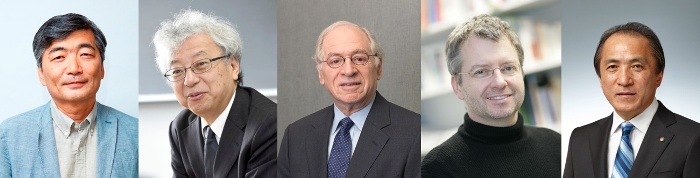
From left to right:
Naoyuki Shinohara
Professor at Policy Alternatives Research Institute, The University of Tokyo
Motoshige Itoh
Professor at Gakushuin University
Professor Emeritus, The University of Tokyo
Gerald L. Curtis
Burgess Professor Emeritus of Political Science at Columbia University
Franz Waldenberger
Director, German Institute for Japanese Studies
Hiroyuki Yanagi
President, Chief Executive Officer and Representative Director of Yamaha Motor Co., Ltd
Going Global, but How? Diversity in Transnationalisation Processes of Japanese Labour Activism
Social activism is not a nation state-bound phenomenon, but globally embedded. The Japanese labour movement represents a particularly interesting case to study the relationship between global frameworks of activism and their transformative impact on domestic activism, as it displays a much broader diversity than institutionalist approaches can explain. While parts of the Japanese labour movement strongly resemble their international counterparts, others remain remarkably distinct.
To explain this diversity, I elucidate the interaction between isomorphic influences of global frameworks of labour activism and the strategic selection and adoption by different actors in the Japanese labour movement.
Disaster, Law and Justice in Japan: In the Tsunami of Debt and Lost Homes
The Great East Japan Earthquake of 2011 unleashed unprecedented tremors and a devastating tsunami, damaging one million buildings and rendering 300,000 victims displaced and dispossessed. Former home-owners and businesspeople found themselves in the position of seeking loans to rebuild and invest, while being unable to pay off pre-disaster mortgages and debts.
Largely unnoticed outside of Japan, this so-called “double-loan crisis” promoted private and corporate insolvency, threatening financial institutions, jeopardising disaster recovery and entrenching social inequality. Treating issues of property insurance, debtor-creditor, social welfare, charity, financial and insolvency law, this paper examines the situation of the tsunami victims from a legal perspective.
Contemporary Japan 28, No. 2
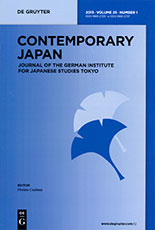
Contemporary Japan ist eine internationale, begutachtete Zeitschrift, die vom Deutschen Institut für Japanstudien (DIJ) herausgegeben wird. Sie erscheint zweimal jährlich bei de Gruyter, Berlin und New York.
Das Journal versteht sich als interdisziplinäre Plattform für moderne Japanforschung, die unterschiedliche akademische Perspektiven auf das gegenwärtige Japan und seine historischen Wurzeln zusammen bringt.
High-tech Start-up Ecosystems in East Asian Agglomerations: Are They Different From the West?
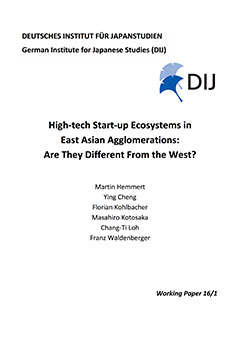 Start-up ecosystems within regional agglomerations have been intensively studied in Western countries, but much less in East Asia. Therefore, little is known about the specific features of East Asian start-up ecosystems.
We study the high-tech start-up ecosystems within four leading East Asian agglomerations: Tokyo, Seoul, Suzhou and Chongqing.
Managing One’s Own Death: The Shūkatsu Industry and the Enterprising Self in an Ageing Society
Japan ranks among the first in the world in terms of average life-expectancy, but its combination of high-age with a low birthrate is gradually turning it into a “society of many deaths” (tashi shakai). With the current change in family structures, the need to make arrangements for one’s own passing is felt by an ever growing number of people. Trying to cash in on this demand, the ailing funeral industry has started to urge individuals to take care of their own future grave, funeral, inheritance, elderly care and property clean-up, promoting these activities under the label “shūkatsu” (end of life activity).
Gemeinsame Bücherausstellung zum 100. Todestag von Natsume Sōseki
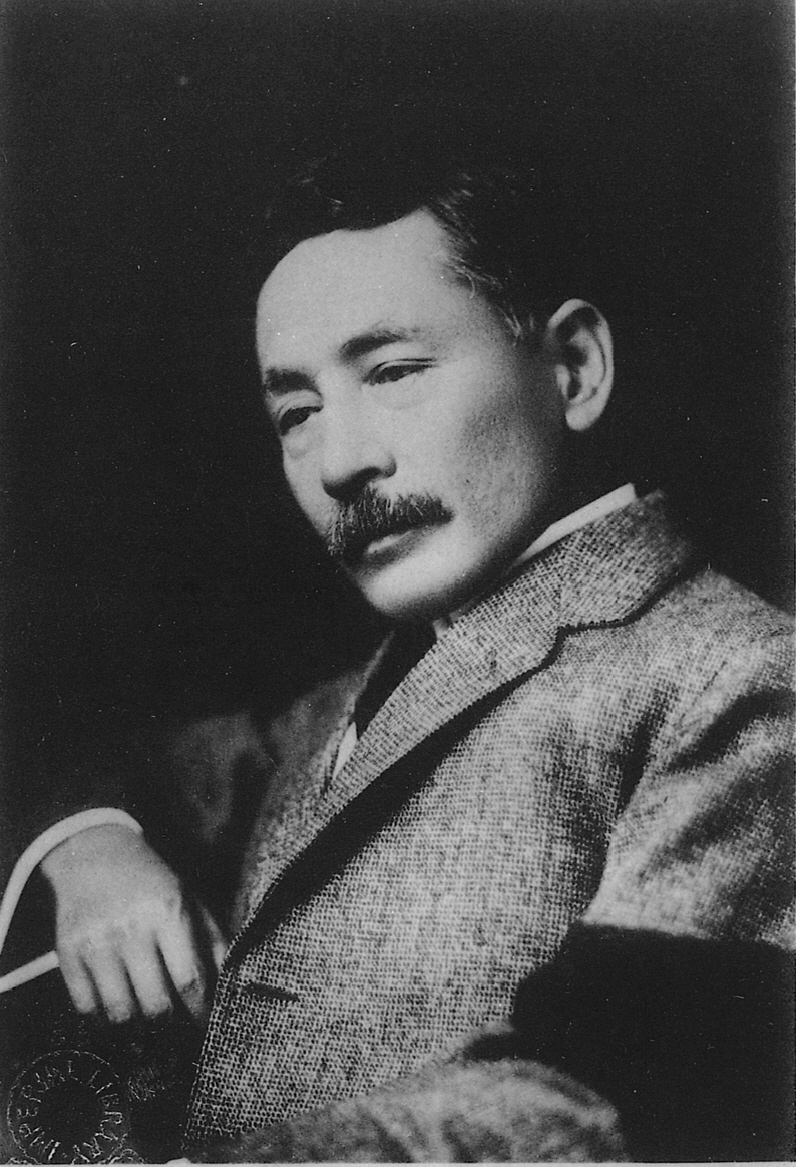
In diesem Jahr begehen wir den 100. Todestag des bedeutenden japanischen Schriftstellers Natsume Sōseki. Die Bibliotheken des International House of Japan, des Maison Franco-Japonaise sowie des Deutschen Instituts für Japanstudien stellen zu diesem Anlass englisch-, französisch- und deutschsprachige Übersetzungen seiner Romane aus. Darüber hinaus gibt es verschiedene Rezensionen sowie Dissertationen zum Thema Sōseki zu lesen.
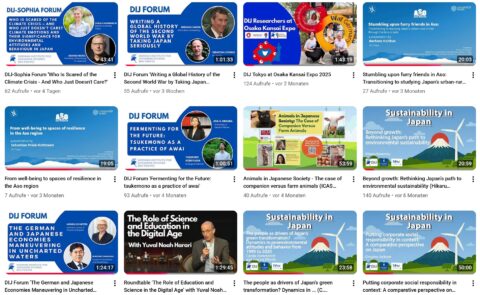
Sustainability-Blog
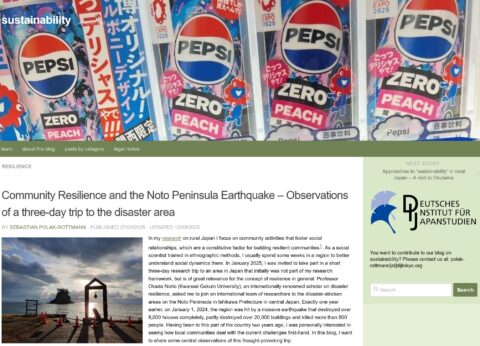
Lesen Sie die neuesten Artikel unseres DIJ-Blogs Sustainability in Japan and Beyond

 Follow us on Bluesky
Institutsbroschüre
Einblicke in unser Institut und seine Aktivitäten bietet unsere aktuelle DIJ Broschüre (Stand 4/2025)
Call for Submissions

Contemporary Japan
Aktuelle Ausgabe Vol. 38, Nr. 2
Contemporary Japan akzeptiert Einsendungen ganzjährig ohne Abgabefrist. Zur Veröffentlichung angenommene Artikel werden umgehend online publiziert. Weitere Details finden Sie hier.
DIJ Monographienreihe
Unsere Monographien sind nach einem einjährigen Embargo  Open Access und können hier heruntergeladen werden:
→ DIJ Monographien
Wegbeschreibung
DIJ Tokyo
Jochi Kioizaka Bldg. 2F
7-1 Kioicho Chiyoda-ku, Tokyo
102-0094 Japan
Wegbeschreibung
+81 (0)3 3222-5077
+81 (0)3 3222-5420
dijtokyo@dijtokyo.org

DIJ-ARI Asian Infrastructures Research Partnership