Veranstaltungen und Aktivitäten
ORF Interviews: “Olympia 2020: Das Abenteuer Tokio”
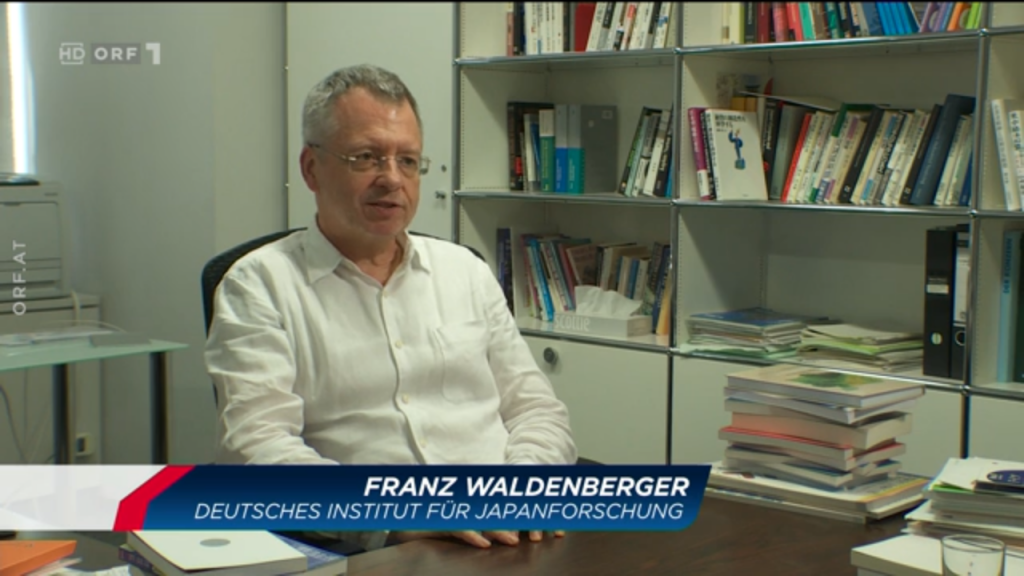
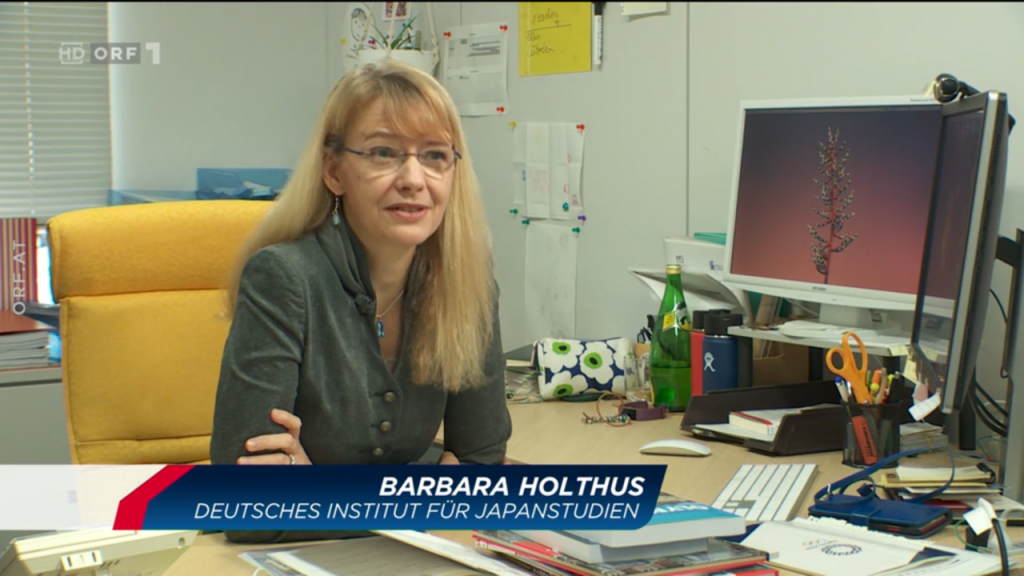
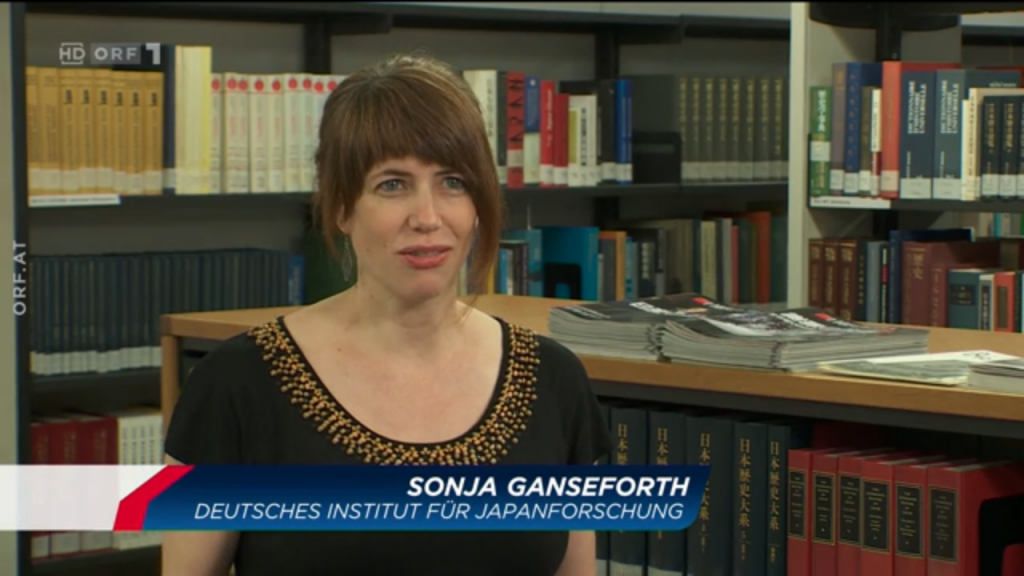
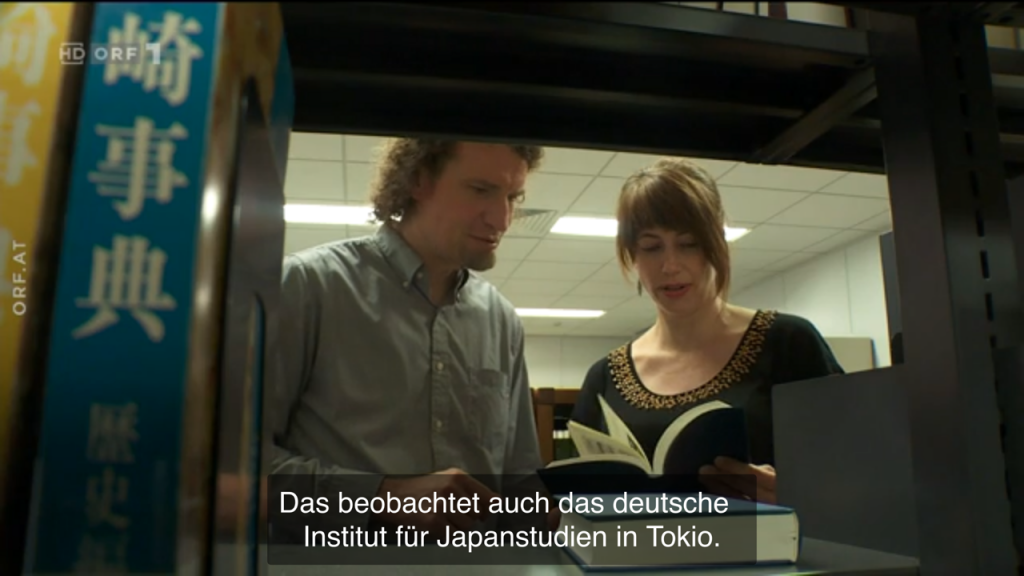
Das DIJ wurde für den Bericht “Olympia 2020: Das Abenteuer Tokio” in der ORF-Sendung „Sport am Sonntag“ (Erstausstrahlung: 16.06.2019, 18 Uhr im ORF) interviewt.
Die ganze Sendung können Sie sich in der Mediathek des Österreichischen Rundfunks ansehen (Zugriff nur aus Österreich möglich).
Das DIJ arbeitet momentan an einem Buch, welches eine große Bandbreite an Themen im Zusammenhang mit den Tokyo Olympics abdecken wird. Der Arbeitstitel lautet “Japan through the lens of the Tokyo Olympics”. Das Buch wird im Januar 2020 bei Palgrave erschienen.
Partner bei EU-Projekt: „ACCESS – Supporting Digital Literacy and Appropriation of ICT by Older People“
Das DIJ Tokyo ist Partner in dem von Professor Claudia Müller an der Universität Siegen koordinierten multidisziplinären und transnationalen EU-Projekt „ACCESS – Supporting Digital Literacy and Approriation of ICT by Older People“. Ziele sind die Erforschung und Evaluierung von Lernmöglichkeiten, mit denen speziell ältere Menschen mit dem Umgang mit modernen ICT-Lösungen vertraut gemacht werden können, die mehr Selbständigkeit, eine bessere soziale Teilhabe und insgesamt eine Verbesserung der Lebensqualität versprechen. Das DIJ zeichnet sich in dem Projekt für den Japanteil verantwortlich.
Memorandum of Understanding mit Institut français de recherche sur le Japon à la Maison franco-japonaise
Das DIJ Tokyo und das Institut français de recherche sur le Japon à la Maison franco-japonaise haben ein Memorandum of Understanding abgeschlossen, in welchem sie einen engeren Austausch auf dem Gebiet der sozial- und geisteswissenschaftlichen Japanforschung vereinbaren. Damit sollen insbesondere auch die Potenziale bei der Zusammenarbeit in der Forschung und bei wissenschaftlichen Veranstaltungen weiter ausgeschöpft werden.
Report on the Transregional Academy „Infrastructures, Regions and Urbanizations“
The Berlin-based Forum Transregionale Studien and the Max Weber Stiftung – Deutsche Geisteswissenschaftliche Institute im Ausland had invited 18 doctoral and postdoctoral scholars from the humanities and social sciences to attend a Transregional Academy convened at the National University of Singapore (NUS) on the topic of “Infrastructures, Regions and Urbanizations”. The Academy was chaired by Weiqiang Lin and James D. Sidaway (National University of Singapore), Franz Waldenberger (Deutsches Institut für Japanstudien, Tokyo) and Simone Lässig (Deutsches Historisches Institut Washington). It was arranged in cooperation with the Asia Research Institute and its director Jonathan Rigg as well as the Max Weber Foundation Research Group on Borders, Mobility and New Infrastructures at NUS.
Read the full report by Franz Waldenberger
Join the DIJ as Post-Doctoral Research Fellow
 We are seeking applicants to fill a project position planned to start on 1 March 2019 for a Post-Doctoral Research Fellow.
The position will form part of the project “Streams of Knowledge: Processes of Entanglement and Disentanglement in the Pacific Area.” This is a joint project carried out in cooperation with the German Historical Institutes in Moscow and Washington, their branch offices in Vladivostok and Berkeley, and the MWS Research Group at the National University of Singapore.
Monumenta Nipponica 80th Anniversary Symposium: Roundtable
Deputy Director Barbara Holthus introduces the DIJ at the Monumenta Nipponica 80th Anniversary Symposium:
The event’s full video playlist is available on YouTube.
WeberWorldCafé: Demographic Change – Challenges and Answers for Local Communities

Many modern societies are increasingly confronting demographic change, i.e. the ageing and shrinking of population. This is particularly true for Japan and Germany, which are the worldwide “front-runners”. The social, economic and political implications are most strongly and directly felt at the level of local communities.
The idea of the WeberWorldCafé on “Demographic Change – Challenges and Answers for Local Communities” jointly conceived and organized by the German Institute of Japanese Studies (Tokyo) and the Institute of Gerontology at the Technical University of Dortmund is to bring together researchers, policy makers and civic society representatives with proven expertise in local demographic policies from Germany, the EU and Japan, to discuss how local communities can best prepare to cope with the demographic challenge.
Gemeinsame Bücherausstellung:
90-jähriges Gedenken an Akutagawa Ryūnosuke

Das Jahr 2017 markiert den 90. Todestag von Akutagawa Ryūnosuke, welcher als Japans herausragendster Autor der Taishō-Zeit angesehen wird.
Die International House of Japan Library, die Bibliothèque de la Maison franco-japonaise, und die Bibliothek des Deutschen Instituts für Japanstudien stellen Übersetzungen von Akutagawas Arbeiten und kritischen Studien aus.
Genießen Sie bei dieser Gelegenheit die zahlreichen Meisterwerke auf Englisch, Französisch und Deutsch.

Sustainability-Blog

Lesen Sie die neuesten Artikel unseres DIJ-Blogs Sustainability in Japan and Beyond

 Follow us on Bluesky
Institutsbroschüre
Einblicke in unser Institut und seine Aktivitäten bietet unsere aktuelle DIJ Broschüre (Stand 4/2025)
Call for Submissions

Contemporary Japan
Aktuelle Ausgabe Vol. 38, Nr. 2
Contemporary Japan akzeptiert Einsendungen ganzjährig ohne Abgabefrist. Zur Veröffentlichung angenommene Artikel werden umgehend online publiziert. Weitere Details finden Sie hier.
DIJ Monographienreihe
Unsere Monographien sind nach einem einjährigen Embargo  Open Access und können hier heruntergeladen werden:
→ DIJ Monographien
Wegbeschreibung
DIJ Tokyo
Jochi Kioizaka Bldg. 2F
7-1 Kioicho Chiyoda-ku, Tokyo
102-0094 Japan
Wegbeschreibung
+81 (0)3 3222-5077
+81 (0)3 3222-5420
dijtokyo@dijtokyo.org
DIJ-ARI Asian Infrastructures Research Partnership