Veranstaltungen und Aktivitäten
Book publication on Japan and the Tokyo Olympics
 Japan Through the Lens of the Tokyo Olympics (Routledge 2020) situates the 2020 Tokyo Olympics within the social, economic and political challenges for Japan. Tokyo 2020 is constructed to embrace diversity and inclusiveness in society, foster sustainability, boost Japan’s economy, and create a feeling of unity and pride for the country. Irrespective of the Olympic’s postponement or potential cancellation, this book explains the multifaceted impact of the Tokyo Olympics on Tokyo, on Japan and on its society, businesses, and its self-identity. Written by leading experts on Japan, this volume assembles 34 easily accessible chapters covering all relevant aspects of society, economics, culture, and politics incl. technology, food, security, work, media, sexuality, history, film, linguistics, volunteering, architecture, advertising, and – of course – sports! Project page
Edited by Barbara Holthus, Isaac Gagné, Wolfram Manzenreiter, and Franz Waldenberger, this book contains many contributions by current and former DIJ researchers. It is now available in paperback, hardcover and as open access book.
Book chapter on Decline and Diversification in Coastal Fisheries
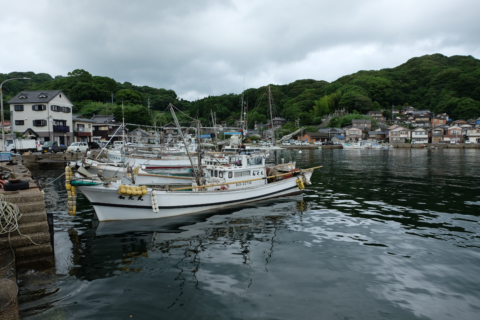
Based on fieldwork in the prefecture of Saga in Northern Kyushu, this chapter by Sonja Ganseforth explores the struggles of small family fishing businesses and cooperatives dealing with global and national transformations since the 1980s. The emergence of buyer-driven global commodity chains in seafood, the proliferation of large supermarket chains and a re-orientation of consumer preferences constitute a profound shift in the seafood business in Japan. Growing resource problems, high input costs and stagnating fish prices contribute to the declining profitability of local coastal fisheries. Drawing on research on rural experiences of globalization as well as critical analyses of development, growth and sustainability discourses, the chapter “Reclaiming the Global Countryside? Decline and Diversification in Saga Genkai Coastal Fisheries” argues that qualitative reform of fishery cooperatives, marketing and resource management is needed to halt socio-economic decline in Japanese coastal fisheries.
This chapter is part of the volume Japan’s New Ruralities. Coping With Decline in the Periphery (Routledge), co-edited by W. Manzenreiter, R. Lützeler, and S. Polak-Rottmann, and draws on Sonja’s research projects on Japan’s Blue Economies and What Is the Local?
New publication on Telehealth Networks in Japan’s Regions
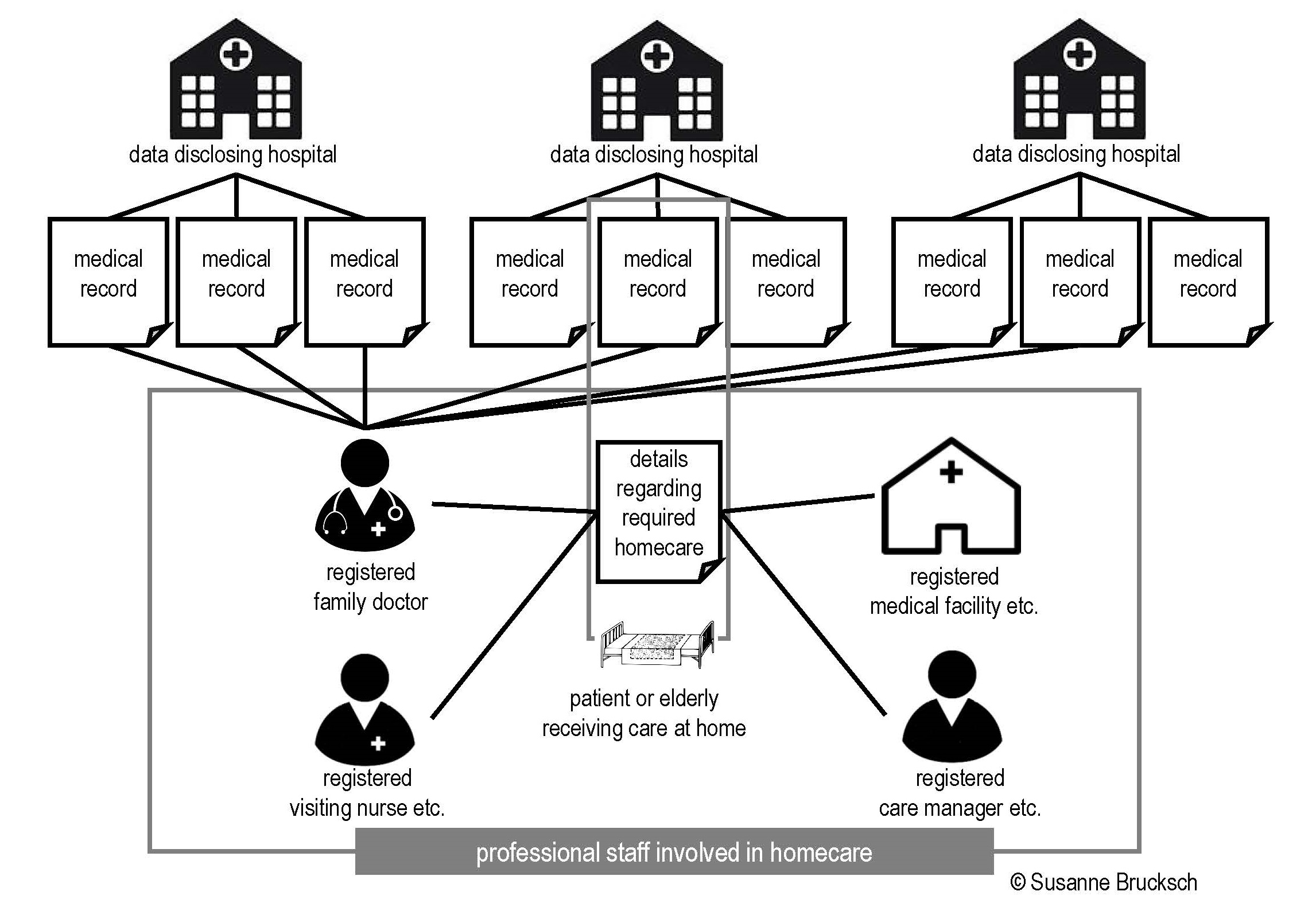 During the ongoing COVID-19 pandemic, telemedicine and telecare receive particular attention as ways to avoid infections and to protect vulnerable groups. In fact, several municipalities and prefectures in Japan have already introduced telehealth networks to link local healthcare institutions and medical practitioners. In her latest publication, Susanne Brucksch examines how these networks promote the establishment of “Regional Integrated Healthcare Systems” and generate synergies between medical and long-term care regarding healthcare staff, services, and infrastructure. The chapter ‘Sustaining Healthcare in Japan’s Regions: The Introduction of Telehealth Networks’ contains findings from an interview study (2017) on two cases regarding the provision of and access to healthcare services, while referring to the theoretical concept of socio-spatial-digital proximity by N. Oudshoorn (2011). Overall, the findings suggest that the telehealth infrastructure is a necessary precondition to promote and to initiate collaboration between various healthcare institutions in order to establish a regional healthcare system.
This chapter is part of the volume Japan’s New Ruralities. Coping With Decline in the Periphery (Routledge), co-edited by W. Manzenreiter, R. Lützeler, and S. Polak-Rottmann, and draws on Susanne’s research projects on Ageing in Japan and Biomedical Engineering in Japan.
Neue Publikation zum ländlichen Japan (auf Englisch)
 Several DIJ researchers, alumni, and affiliates have contributed to this new publication on political innovations, transformations, and new residents in rural Japan. Sonja Ganseforth examines the decline and diversification in Saga Genkai coastal fisheries, Daniel Kremers (with Thomas Feldhoff) looks at Japan’s energy transformation and its potential for the remaking of rural communities, Susanne Brucksch studies the introduction of telehealth networks in Japan’s regions, and Hanno Jentzsch analyzes the promotion of wine tourism in Yamanashi. Their research is part of the DIJ’s research focus on The Future of Local Communities in Japan.
The volume is co-edited by Wolfram Manzenreiter, former DIJ research fellow Ralph Lützeler, and Sebastian Polak-Rottmann. It is published in the Nissan Institute/Routledge Japanese Studies series and available as hardback, paperback, and eBook.
JDZB-Interview mit Barbara Holthus zu Olympia 2020
“Japan und Tokyo versuchen sich mit den Olympischen und Paralympischen Spielen als Ort der Diversität, der Inklusion, der Weltoffenheit, der „Coolness“, und der Gastfreundschaft neu zu erfinden. Auch wird versucht, die Nuklearkatastrophe von Fukushima als „überwunden“ darzustellen. Insgesamt dient Tokyo 2020 als Prisma, in dem sich die Hoffnungen verschiedenster Akteure mit den kommerziellen Interessen des IOC und der Sponsoren verdichten.”
In der aktuellen Ausgabe von jdzb echo, den Mitteilungen des Japanisch-Deutschen Zentrum Berlin berichtet Barbara Holthus von Olympia 2020 und dem Buchprojekt Japan through the Lens of the Tokyo Olympics, das sie mitherausgibt. Bitte beachten: Das im Interview erwähnte, für den 2. April geplante Event im JDZB wurde inzwischen vorschoben. 
Neue Studie: Einsatz von robotischen Systemen in der Pflege in Japan
 Franz Waldenberger (Direktor des DIJ) und Sieun Park (Stipendiatin am DIJ) untersuchten im Rahmen einer vom IGES Institut, Berlin, erstellten Studie, in welchem Umfang in Japan robotische Systeme in der Pflege zum Einsatz kommen, welche Potenziale ihnen die Praxis beimisst und welche Akzeptanzprobleme es dabei zu überwinden gilt. Die Frage besitzt vor dem Hintergrund des Fachkräftemangels in der Pflege eine hohe Relevanz. Die Kurzfassung der für das Bundesministerium für Wirtschaft und Energie erstellten Studie ist über diesen Link erhältlich.
Neuer Artikel zur anti-Olympia Bewegung in Japan (auf Englisch)
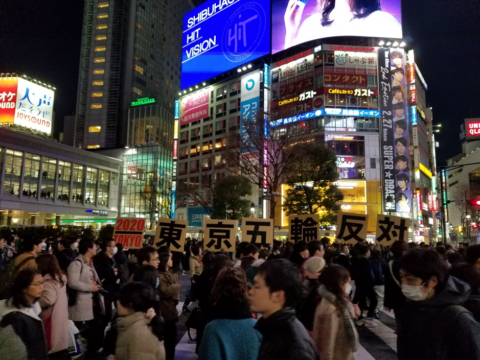 Since the radicalization of some leftist movements in the 1960s and 1970s, political activism in Japan is often met with skepticism or suspicion, and social movements are largely characterized by small and senior membership. Anti-Olympic opposition in Japan is largely sustained by activist veterans from this “invisible civil society”. While this activism may alienate the public, connections to other Japanese social movements are rich, especially to the anti-nuclear movement that has emerged since the 2011 nuclear disaster.
Read more in ‘Anti-Olympic Rallying Points, Public Alienation, and Transnational Alliances’, a contribution by Sonja Ganseforth to the Special Issue on Japan’s Olympic Summer Games in The Asia-Pacific Journal – Japan Focus, edited by Jeff Kingston.
Neues Working Paper zu Olympia 2020
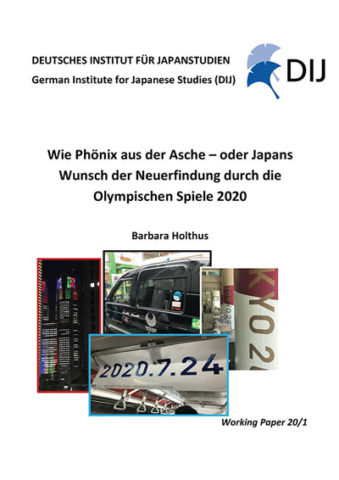 Das Jahr 2020 wird in Japan seit Jahren sowohl als Ziel und Neuanfang gehandelt, wenn die Welt für knapp 30 Tage auf das Land und ganz besonders Tokyo schaut. Stellvertretend für das ganze Land erhofft sich Tokyo, als Hauptstadt von „Cool Japan“ und als Veranstalter der technologisch versiertesten Olympischen Spiele wahrgenommen zu werden. Japan will sich als Land präsentieren, das die wirtschaftlichen Auswirkungen der demographischen Entwicklung überwunden und sich wieder an die Spitze der Welt katapultiert hat. In diesem Beitrag blickt Barbara Holthus auf diese Anstrengungen zur Neuerfindung des Landes und wie die Olympischen Spiele hierfür instrumentalisiert werden.

Sustainability-Blog

Lesen Sie die neuesten Artikel unseres DIJ-Blogs Sustainability in Japan and Beyond

 Follow us on Bluesky
Institutsbroschüre
Einblicke in unser Institut und seine Aktivitäten bietet unsere aktuelle DIJ Broschüre (Stand 4/2025)
Call for Submissions

Contemporary Japan
Aktuelle Ausgabe Vol. 38, Nr. 2
Contemporary Japan akzeptiert Einsendungen ganzjährig ohne Abgabefrist. Zur Veröffentlichung angenommene Artikel werden umgehend online publiziert. Weitere Details finden Sie hier.
DIJ Monographienreihe
Unsere Monographien sind nach einem einjährigen Embargo  Open Access und können hier heruntergeladen werden:
→ DIJ Monographien
Wegbeschreibung
DIJ Tokyo
Jochi Kioizaka Bldg. 2F
7-1 Kioicho Chiyoda-ku, Tokyo
102-0094 Japan
Wegbeschreibung
+81 (0)3 3222-5077
+81 (0)3 3222-5420
dijtokyo@dijtokyo.org

DIJ-ARI Asian Infrastructures Research Partnership