Events and Activities
DIJ researchers in German and Japanese media
Deputy director and sociologist Barbara Holthus is quoted in the current issue of the German weekly newspaper Die Zeit (46/2020). In the article “Zurücktreten, bitte”, Barbara criticizes the restrictions imposed by the Japanese government on foreigners seeking to re-enter Japan during the Corona pandemic.
Historian Torsten Weber is quoted in the German weekly magazine Der Spiegel (45/2020). In “Globaler Kampf”, Torsten comments on nationalist elements in exhibitions promoting the Tokyo Olympics and Japan’s Olympic history. His remarks draw on research he has done for the DIJ’s special project on the Tokyo Olympics.
In the context of recent discussions about politics and academic freedom in Japan, historian of science Harald Kümmerle is quoted in a Kyodo article that was printed in several Japanese daily newspapers, including the Chūgoku Shimbun (1 November 2020). Giving the example of Albert Einstein’s expulsion from the German National Academy of Natural Sciences Leopoldina in 1933, Harald explains the treatment of Jewish scientists in Nazi Germany.
Quo Vadis, Central Banks? Monetary Policy in the COVID-19 Crisis and Beyond
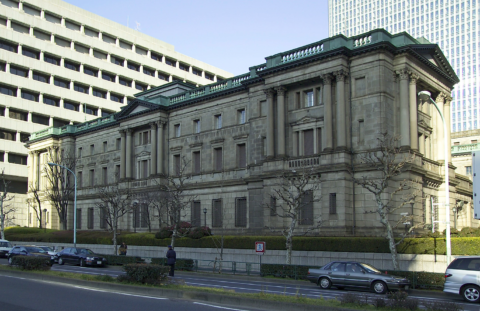 DIJ DWIH Web-Forum
Central bank laws in the US, Japan, and Europe consider price stability as the prime goal of monetary policy. However, since the Global Financial Crisis and even more so during the present COVID-19 crisis, we have observed the implementation of unconventional monetary policy measures accompanied by an unprecedented concerted action between monetary and fiscal authorities. Are these changes only temporary or do they indicate a fundamental change in the role of central banks, their relationship with governments and the constitution of monetary policy? How does the “new normal” affect the independence of central banks? The discussions in this Web-Forum will explore monetary policy in the COVID-19 crisis and its implications for current and future central banking. Details
Speakers:
Kiyohiko G. Nishimura, former Bank of Japan Deputy Governor (2008-2013)
Katrin Assenmacher, Head of the Monetary Policy Strategy Division, ECB
Moderated by Kazuo Momma, Executive Economist, Mizuho Research Institute
Agenda-Cutting in Media News Coverage of Covid-19: A Case Study from Japan
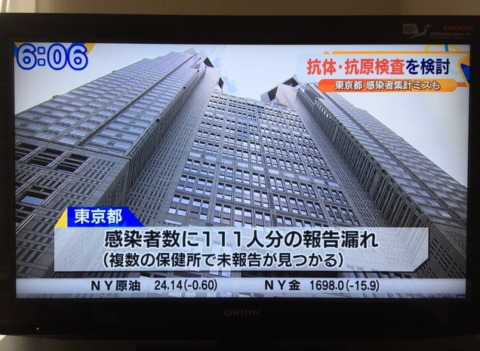
In liberal democracies, there is the expectation that the role of mass media is to provide swift and accurate information to the public – especially in times of crisis such as the ongoing Covid-19 pandemic. Risk communication is particularly challenging for journalists as they have to balance the circulation of precise information on dangers and the avoidance of fear-mongering. This presentation by Yosuke Buchmeier addresses the question of how the Covid-19 crisis has been covered in the Japanese media, primarily focusing on television news coverage of the public broadcaster NHK. This research project is based on the theoretical concept of ‘agenda-cutting’, which describes the phenomenon when a relevant societal issue is deliberately de-emphasized, entirely omitted or removed from a news agenda. Details
Speaker:
Yosuke Buchmeier, LMU Munich/DIJ Tokyo
Joint exhibition of Mishima Yukio’s writings and Mishima studies
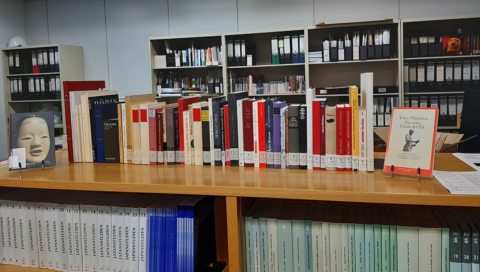 The year 2020 marks the 50th anniversary of the death of writer Mishima Yukio. On this occasion, the International House of Japan Library, the Bibliothèque de la Maison franco-japonaise and the Library of the German Institute for Japanese Studies present translations of Mishima’s works and critical studies of his writings and life to the public. Please take this opportunity to enjoy the numerous masterpieces in English, French, and German. The exhibition is open from October 1 to October 31, 2020. For more information about the exhibition, opening hours, and participating libraries, please see this flyer. A list of writings on display in the DIJ library is available here. Before planning your visit, please contact the respective library directly.
SJCC webinar on Japan’s system of corporate governance
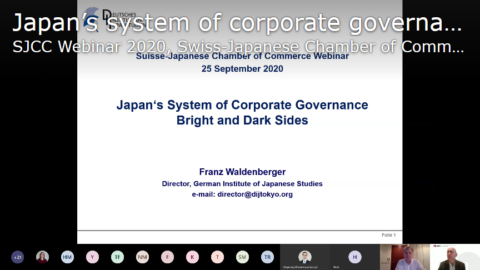
On September 25, DIJ director Franz Waldenberger was guest speaker in the SJCC webinar series, organized by the Swiss-Japanese Chamber of Commerce in cooperation with JETRO Switzerland and the Japan Club of Geneva. Even 30 years of ongoing reforms and structural changes have not improved the image of Japanese corporate governance among foreign investors. In his talk “Japan’s system of corporate governance – bright and dark sides”, Franz Waldenberger explained why Japanese boards remain to be insider controlled and what implications this has for performance. However, he also stressed the positive sides of a system where shareholders can be assured that managers are loyal to their company. A video of the webinar is available on the SJCC’s website.
Barbara Geilhorn on post-3.11 theatre in Swiss radio feature
DIJ researcher Barbara Geilhorn has appeared in the SRF Swiss radio feature “Verstrahlte” Gesellschaft: ein japanisches Trauma (“Radiated” society: a Japanese trauma) by Martin Fritz. Drawing on her ongoing research project Local Issues Take Stage – Culture and Community Revitalization, Barbara provided expert commentary on how theatre in Japan has dealt with the nuclear meltdown in Fukushima in 2011. Theatre plays addressed the situation after the accident and the different reactions of people to it: either ignoring the nuclear dangers or facing them and acting accordingly. They also problematized issues of social conformity and the reluctance of Japanese people to voice criticism openly, Barbara explains. The radio programme is available as podcast on the SRF website here (in German)
Journal article on dislocation and social isolation in post-3.11 Japan
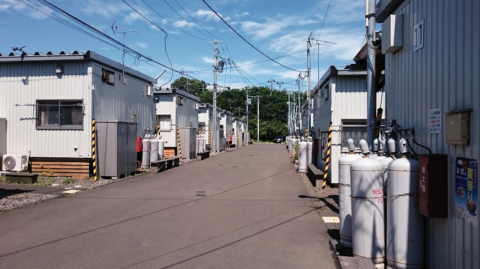
What happens when temporary shelters become permanent homes? What are the psychosocial impacts of prolonged dislocation, and how might these effects be mitigated through grassroots community activities? Based on fieldwork and interviews with residents in temporary housing and volunteer support groups in northeastern Japan, Isaac Gagné’s new article “Dislocation, Social Isolation, and the Politics of Recovery in Post-Disaster Japan” (Transcultural Psychiatry) analyzes the ongoing challenges of delayed recovery and chronic dislocation among survivors of the March 11, 2011 disaster in Japan. Focusing on Natori City, Miyagi Prefecture, Isaac examines how the complexity of the disaster-recovery process within the local politics of the region has produced new tensions, creating a particular “zoned liminality” for displaced residents while undermining the social nexus of community relations. The article also reflects on challenges in treating the psychosocial trauma among survivors, and how their needs are addressed through new citizen-based volunteer movements.
New book chapter on women in Düsseldorf’s food community
 A new book chapter by Nora Kottmann addresses life choices of Japanese women who live and work abroad. Focusing on women employed in Japanese culinary locales in a quarter called ‘Little Tokyo’ in the German city of Düsseldorf, it asks: Why do these women choose to work in the Japanese food service sector? What role do Düsseldorf’s Japanese community and the respective foodscape play in these women’s decision to move? Findings reveal that the choice of employment is mostly pragmatic and rarely the main reason for moving abroad. However, work in the food sector can serve as an opportunity to accomplish the dream of being in charge of one’s own life. The chapter “Japanese women on the move: Working in and (not) belonging to Düsseldorf’s Japanese (food) community” is part of the volume Food identities at Home and on the Move (edited by Raúl Matta, Charles-Édouard de Suremain, Chantal Crenn).


 Follow us on Bluesky
Call for Submissions
Contemporary Japan
current issue Vol. 38, No. 1
Contemporary Japan is open year-round for rolling submissions, with accepted publications published immediately online. Please see the instructions for submission here.
DIJ Monograph Series
Our monograph series is  Open Access after a one-year embargo period. Downloads are available on our
→ monographs pages.
Access
DIJ Tokyo
Jochi Kioizaka Bldg. 2F
7-1 Kioicho Chiyoda-ku, Tokyo
102-0094 Japan
Where to find us
+81 (0)3 3222-5077
+81 (0)3 3222-5420
dijtokyo@dijtokyo.org

DIJ-ARI Asian Infrastructures Research Partnership