Veranstaltungen und Aktivitäten
DIJ research at the AAS-in-Asia 2020 conference
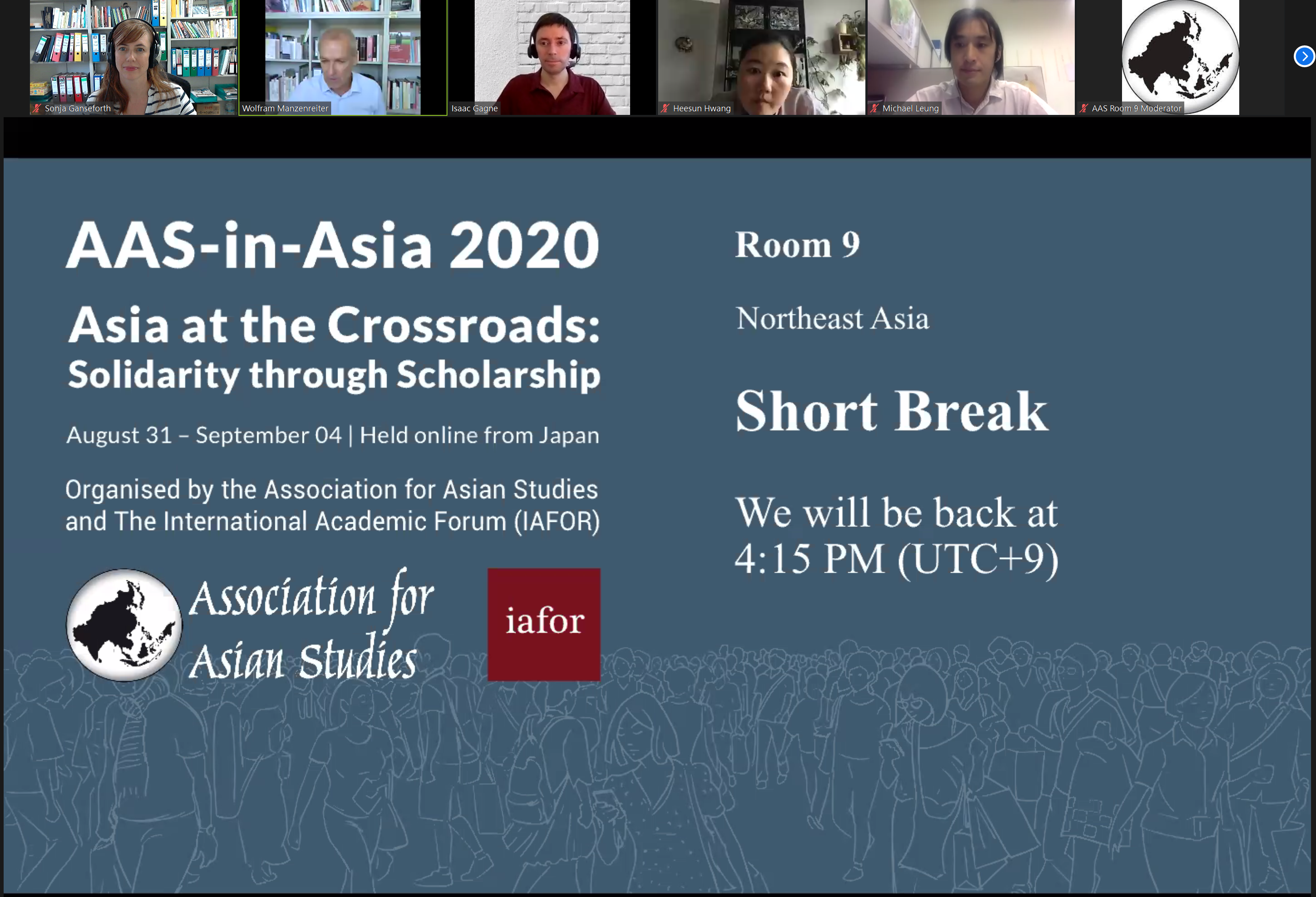 Our research fellows Isaac Gagné and Sonja Ganseforth have presented their latest research on social and economic developments in Japanese rural and fishing communities at the AAS-in-Asia 2020 conference, held online from August 31 to September 4. Isaac analyzed how residents and volunteers conceptualize and actualize local moral worlds of care through community-based services in his paper ‘Moral Worlds of Welfare: Social Isolation and Community-based Care in Aging Japan’. Sonja’s paper ‘New Marinalities of Japanese Fishing Villages’ discussed how structural change in rural Japanese fishing villages can be understood through the analysis of interconnected local, national, and global dynamics. Their panel “Rurality Check: Tracing the Nascent Global Countryside in Asia” was chaired and organized by Wolfram Manzenreiter (University of Vienna) and also had presentations by Heesun Hwang (Seoul National University) and Michael Leung (City University of Hong Kong).
New DIJ Miscellanea Venezianische Wahrheiten (in German)
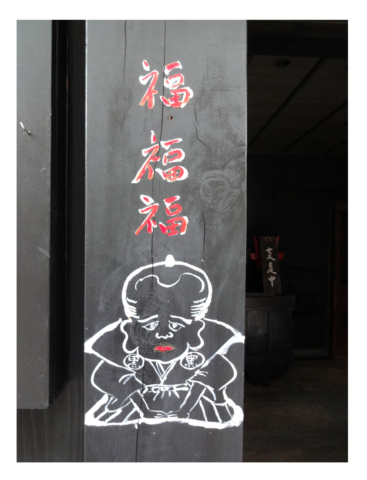
Japan and Italy have many things in common. Both are rich, industrialised countries with a long cultural tradition that is held in high esteem worldwide. People in both countries enjoy a longer life than almost anywhere else in the world. For both countries, the processes of ageing and population shrinkage are challenges with diverse social, economic, and political facets. But Japan and Italy also differ in many respects, e.g. in social conventions, etiquette, work ethics and everyday behaviour. These similarities and differences make a comparison attractive. Former DIJ director Florian Coulmas has recorded his observations, insights, and experiences during a semester he spent at the University of Venice Ca’ Foscari in the new publication Venezianische Wahrheiten. Japanische Lektionen in der Stadt Marco Polos (in German). The booklet is published as volume 20 in the DIJ Miscellanea series and available for download here.
FULLY BOOKED Boys for Sale – film screening and discussion at OAG House

Lecture Series ‘Gender and Sexuality in East Asia’ (4/5)
In Tokyo’s Shinjuku 2-chome district there are bars that specialize in urisen, young guys who have sex with men. Featuring candid interviews and interspersed with animation detailing the awkward, sweet, and sometimes horrific situations these young sex workers experience, the boys for sale boldly tell their stories of life in the Tokyo underground. This documentary is an illuminating look into a rarely seen world that tantalizingly shows the humanity of sex work. The film screening will be followed by a discussion with the film’s producer Ian Thomas Ash and a protagonist from the film.
Please note that this event takes place at the OAG House Tokyo. Details
Journal article on agenda-cutting as a neglected media phenomenon
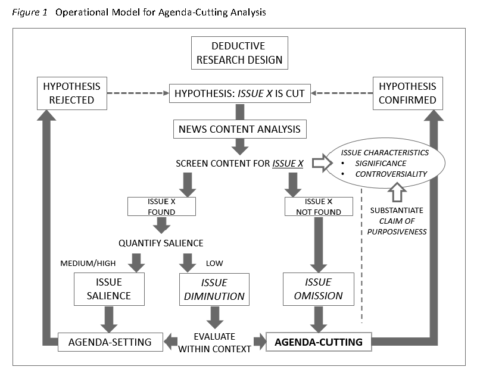
The journal Journalism Studies has published a new article by our PhD fellow Yosuke Buchmeier on agenda-cutting as a neglected media phenomenon. While agenda-setting has developed into one of the leading concepts in communication studies, “agenda-cutting” – a media phenomenon that can be observed when a relevant issue is de-emphasized, entirely omitted or removed from a news agenda – has so far remained a theoretical blind spot. Based on observations from Japan, Yosuke’s paper “Towards a Conceptualization and Operationalization of Agenda-Cutting: A Research Agenda for a Neglected Media Phenomenon” proposes agenda-cutting as a result of media’s anticipatory obedience and self-censorship. It argues that the non-reflected, tacit assumption of agenda-cutting as a by-concept to agenda-setting represents one cause for its theoretical neglect. This paper aims to initiate a scholarly debate by establishing conceptual common ground and proposing a research direction for what the author considers an unduly neglected media phenomenon. Available open access here
Economic Policy Responses to the Covid-19 Crisis in the Euro Area and Japan
 DIJ DWIH Web-Forum
Governments and central banks all over the world have taken historically bold fiscal and monetary policy measures to fight the dramatic, yet still not fathomable economic impact of the Covid-19 crisis. While the announcements have certainly calmed sentiments of market participants, many important questions remain as to how the proposed measures are to be implemented effectively given their gigantic scope and the lack of precedence. Actions need to be taken in a timely manner, as the impact of lockdowns, social distancing and travel restrictions is being felt immediately, and they need to be targeted accurately, because the economic impact varies extremely across industries and households. The speakers in our web-forum will address these concerns by taking Japan and the Euro area, especially Germany as examples. Details
Speakers:
Masaaki Shirakawa, former Bank of Japan Governor (2008-2013)
Volker Wieland, member of the German Council of Economic Experts
Moderated by Yuri Okina, Chairperson of The Japan Research Institute
Barbara Holthus reviews Aaron Skabelund’s Empire of dogs
 “The book on the history of (dog) culture is situated in the crosshairs of culture, history, modernity, society, and animals, and therefore makes for a rare and eye-opening account of the times. […] Skabelund does a great job showing how the construction of human races and animal breeds are interrelated and interwoven.” Barbara Holthus‘ book review of Aaron Herald Skabelund’s Empire of dogs. Canines, Japan, and the making of the modern imperial world (Cornell University Press, 2019) has just been published online first in Contemporary Japan. Details
New book chapter on gender gap in social movement participation
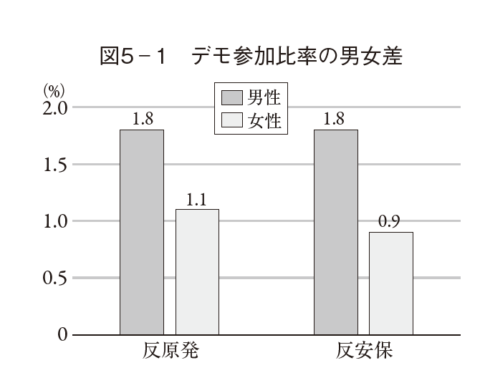
DIJ deputy director Barbara Holthus has co-authored with Naoto Higuchi (Waseda University) a chapter on the gender gap in social movement participation. Their chapter “Demo sanka ni meguru jendā gyappu” (in Japanese) is based on a survey conducted among close to 80.000 Japanese on their social movement sympathies, mobilization and participation patterns, as well as their environmental concerns, personal values, and political views. It shows that participation, concerns, and views are significantly gendered. This large-scale data set allows to give statistical proof and support to many of the previous existing studies, which to the most part until now had been qualitative in nature. The chapter is part of a volume on post-3.11 social movements, co-edited by Naoto Higuchi and Mitsuru Matsutani, and published by Chikumashobo (Tokyo 2020). Details (in Japanese)
Barbara Holthus comments on post-Abe Japan in New York Times
 “Technology that enables more people to work from home could also help women, said Barbara G. Holthus, deputy director of the German Institute for Japanese Studies in Tokyo.” Read more of Barbara Holthus‘ comments on post-Abe Japan, teleworking, the role of women and her advice for Japan’s next prime minister in Motoko Rich’s article Many Want to Be Japan’s New Leader. Do They Know What Awaits Them? in the New York Times.

Sustainability-Blog

Lesen Sie die neuesten Artikel unseres DIJ-Blogs Sustainability in Japan and Beyond

 Follow us on Bluesky
Institutsbroschüre

Einblicke in unser Institut und seine Aktivitäten bietet unsere aktuelle DIJ Broschüre (Stand 4/2025)
Call for Submissions

Contemporary Japan
Aktuelle Ausgabe Vol. 38, Nr. 2
Contemporary Japan akzeptiert Einsendungen ganzjährig ohne Abgabefrist. Zur Veröffentlichung angenommene Artikel werden umgehend online publiziert. Weitere Details finden Sie hier.
DIJ Monographienreihe
Unsere Monographien sind nach einem einjährigen Embargo  Open Access und können hier heruntergeladen werden:
→ DIJ Monographien
Wegbeschreibung
DIJ Tokyo
Jochi Kioizaka Bldg. 2F
7-1 Kioicho Chiyoda-ku, Tokyo
102-0094 Japan
Wegbeschreibung
+81 (0)3 3222-5077
+81 (0)3 3222-5420
dijtokyo@dijtokyo.org

DIJ-ARI Asian Infrastructures Research Partnership