Veranstaltungen und Aktivitäten
DIJ talk on Regretting Motherhood by Forum Mithani (hybrid event)

The publication of Hahaoya ni natte kōkai shiteiru (Regretting Motherhood) in March 2022 attracted significant attention in Japanese media. This followed waves of interest across the globe since the book, by Israeli sociologist Orna Donath, was first published in 2017 and subsequently translated into multiple languages. Donath’s provocative study has caused outrage as well as earned praise for its tackling of a subject that remains a taboo in many societies, not least of all in Japan: women who express regret for having become mothers. This talk introduces Donath’s work, focusing in particular on the book’s reception in Japan, and what it reveals about notions and conditions of motherhood in a society in which the low birth rate continues to raise alarm. Details and registration here
Forum Mithani, Cardiff University & Waseda University
Franz Waldenberger at round table discussion on Japan after Abe’s assassination
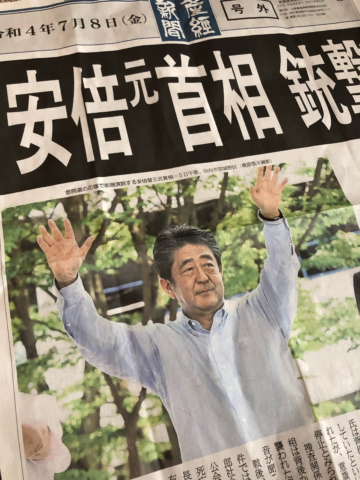
Last week’s assassination of former prime minister Abe Shinzō has shocked Japan and the world. How can we make sense of this event and what does Abe’s death mean for the future of Japanese politics and society? DIJ director Franz Waldenberger will join DIJ alumni Axel Klein (University of Duisburg-Essen) and Alexandra Sakaki (Stiftung Wissenschaft und Politik) to discuss the implications of Abe’s assassination for Japan on July 15, 18.00-19.00 (JST)/11.00-12.00 (CEST), online, hosted by the Japanese-German Center Berlin. The round table discussion “Das Attentat auf Premierminister a.D. Abe – Einordnung und Folgen” will take place in German. Details and registration here
Celia Spoden to give talk on Cybernetic Avatars at EASST conference
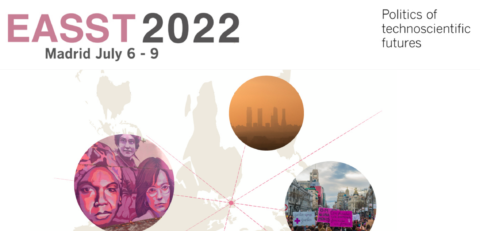
DIJ social scientist Celia Spoden will give insights into her research project Cyber-physical spaces and avatar technologies: new opportunities for an inclusive society? at the upcoming conference of the European Association for the Study of Science and Technology (EASST) in Madrid. Celia’s paper “Visions and Realizations of Cyber-Physical Spaces in Japan: Solving societal issues by Cybernetic Avatars” is part of a panel on Aging technofutures: futuring old age in technological societies. It takes place on Thursday, July 7. In her paper, Celia discusses the technoscientific futures imagined by the Japanese government and compares them to the visions of researchers in the “Moonshot Research and Development Program” which was launched by the Japanese Council for Science, Technology, and Innovation in 2020. More information on the EASST 2022 website here
DIJ talk on data protection regulation in Japan and abroad

In a digitalized world, the trans-border flow of data has become essential for trade and the exchange of services. But some protectionist trends are gaining ground at the international level, such as data localization. Japan is one of the convenors of the WTO e-commerce negotiations, and as a firm believer in the free market and multilateral trade, Japan has tried to export its own ideas internationally. This is why former prime minister Shinzo Abe coined the expression ‘Data Free Flow With Trust’: its objective is to ease the flow of data but with the necessary safeguards for cybersecurity, personal data, or intellectual property. This talk will assess Japan’s push for this concept at the international level, including its successes but also challenges. It will put it in relation with other relevant actors, such as the United States, the EU, and China. Details and registration here
Ana Gascón Marcén, University of Zaragoza
Method Talk (hybrid event): Actors, networks, and where to find them in rural Japan
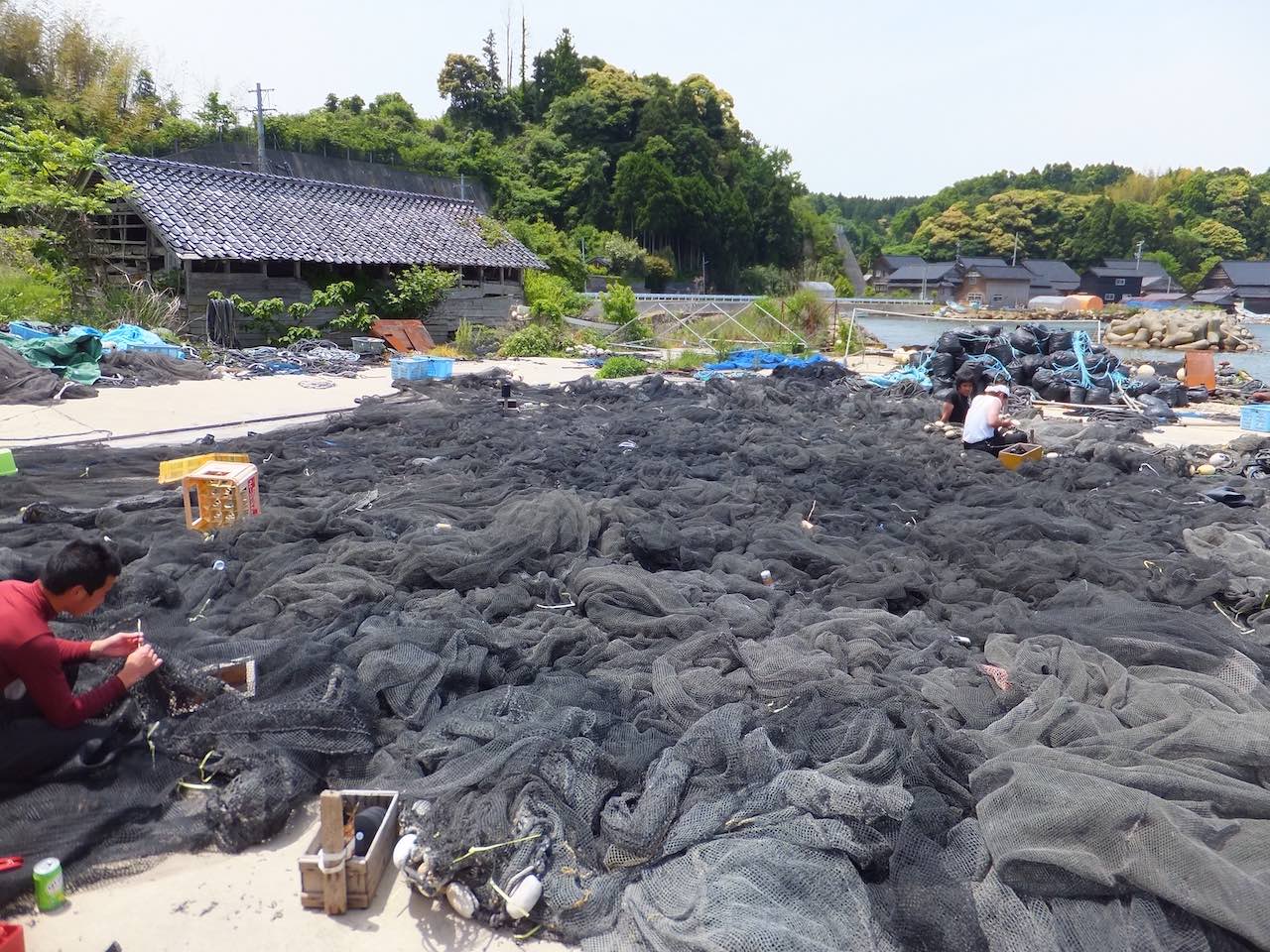 Aging inhabitants, economic decline of the primary sector, outmigration of the young generations – the postgrowth state of Japan’s peripheries challenges local communities to sustain rural living in the globalized age. To stop or even reverse this structural decline, various actors such as regional governments and research institutions forge strategies of revitalization, following national aims as well as global frameworks. For the investigation of these new and complex formations of power and knowledge in rural Japan, actor-and-network theory (ANT) can provide a window to shed light on how different allies find their goals unified in a common project and how links between centers and peripheries are established. It can, moreover, help to understand the impacts that such projects may – or may not – have on the local communities, which are supposed to benefit from them.
Thimo Thelen, Kanazawa University
Franz Waldenberger gives talk at Japan-Germany Forum
-480x223.png)
Upon invitation by the Asia-Eurasia Research Institute DIJ director Franz Waldenberger will give a talk in Japanese on “Japan’s past and present through the eyes of a German” at the Japan-Germany Forum on June 15. The talk will take place online (Zoom) from 14.00-15.00h JST. It will be moderated by Hayase Isamu, chairman of the Japan-Germany Forum. Registration and details here
The Future of Liberalism: international symposium with keynote by Thomas Piketty
 Thomas Piketty, French economist and author of Capital in the Twenty-first Century, will be the keynote speaker at the symposium ‘The Future of Liberalism: Japan, France and Germany in global context’. It will take place online from June 7 to 9 and features 18 international experts on liberalism and capitalism. On Day 1, Piketty’s keynote will be followed by a roundtable discussion with Lisa Herzog (University of Groningen) and Shigeki Uno (University of Tokyo). Day 2 features nine presentations, including by DIJ alumna Yufei Zhou on the “Transition of the Dominant Economic Ideology in China in the 21st Century”. On the closing day, DIJ director Franz Waldenberger will present his paper “Governance in a Knowledge Driven Society”. The symposium is jointly organised by the DIJ, the French Institute of Research on Japan at the Maison franco-japonaise (MFJ), and the Nippon Institute of Research Advancement (NIRA). Registration and details here
Environmental Humanities talk on ‘Cultural Specificity and Planetary Thinking’
 Ishimure Michiko is best known for her writing on mercury poisoning of the Shiranui Sea in and around Minamata in Southern Japan. Yet, in her later years she became increasingly invested in the concept of the planetary. In this talk, we will examine this shift in her writing and the complicated role that cultural forms play in writing that is especially invested in planetary health. Marran will introduce the concept of the “biotrope” as a tool for analyzing Ishimure’s attention to cultural and material elements in the discussion of Ishimure’s final work “Hana no okudo e” (2014). We will conclude our discussion by addressing the ways that area studies may or may not be compatible with particular forms of ecocriticism. This talk is part of the DIJ Environmental Humanities in East Asia lecture series and takes place online on May 25. Details and registration here
Speaker:
Christine L. Marran, University of Minnesota

Sustainability-Blog

Lesen Sie die neuesten Artikel unseres DIJ-Blogs Sustainability in Japan and Beyond

 Follow us on Bluesky
Institutsbroschüre
Einblicke in unser Institut und seine Aktivitäten bietet unsere aktuelle DIJ Broschüre (Stand 4/2025)
Call for Submissions

Contemporary Japan
Aktuelle Ausgabe Vol. 38, Nr. 2
Contemporary Japan akzeptiert Einsendungen ganzjährig ohne Abgabefrist. Zur Veröffentlichung angenommene Artikel werden umgehend online publiziert. Weitere Details finden Sie hier.
DIJ Monographienreihe
Unsere Monographien sind nach einem einjährigen Embargo  Open Access und können hier heruntergeladen werden:
→ DIJ Monographien
Wegbeschreibung
DIJ Tokyo
Jochi Kioizaka Bldg. 2F
7-1 Kioicho Chiyoda-ku, Tokyo
102-0094 Japan
Wegbeschreibung
+81 (0)3 3222-5077
+81 (0)3 3222-5420
dijtokyo@dijtokyo.org

DIJ-ARI Asian Infrastructures Research Partnership